Welcome to Bright Shift Podcast

Join Leila Estifaie Quinn the founder of Bright Shift to explore different topics in psychology, philosophy, spirituality, and more.

Our podcast is a new addition in accordance with Bright Shift’s vision which is to facilitate transformation, healing, and expansion of consciousness.

We hope you enjoy listening to this podcast and find it inspiring.

Are you a psychologically-minded person?

What does it mean to be a psychologically-minded person and why does it matter to view the world from a psychological perspective?

As human beings, we have progressed to a great extent in terms of technological advancements, but psychologically speaking, have we also progressed or evolved to the same extent? Where do we stand today?

Are some cultures more prone to think psychologically than others? Tune into this episode to find the answers to all of the above and much more. An insightful conversation with Dr. Michael Karson.

About the Guest:

Dr. Michael Karson is a clinical psychologist and professor of clinical and forensic psychology at the University of Denver. He has written six books on psychotherapy, early memories, child abuse, the 16PF, and forensic report writing.

Prior to entering academia, Dr. Karson had practiced individual and couples psychotherapy, child welfare assessment, and personnel selection for more than 25 years.

His articles are regularly published in “Psychology Today” magazine.

Rising Beyond Our Identities

Who are you? Or how do you define yourself ? Most of us use notions such as age, gender, job title, degrees, nationality, our achievements or even our shortcomings to define ourselves.  

This is an episode that invites us to rethink how we define ourselves, and challenge our assumptions about our sense of identity. 

We have looked at the concept of identity based on the teachings of the great philosopher and spiritual teacher-Jiddu Krishnamurti. His teachings are deeply transformative and revolutionary on a both spiritual and psychological level. 

Jiddu Krishnamurti spent his entire life travelling the world teaching, writing many books and speaking to large and small groups of people and individuals.  His outlook can shake us awake from everything that we have been conditioned to, believe about ourselves and identify with.   

About the Guests:

Dr. Radhika Herzberger is a writer, an educationist and a scholar in Sanskrit and Indology with a PhD in Indology from the university of Toronto . In 2013, the Government of India honoured her by awarding her the Padma Shri award which is the fourth highest civilian award for her contributions to the fields of literature and education. 

She is a trustee of the Krishnamurti Foundation of India as well as the editor of  their bi-annual bulletin.

Her major educational engagement is to define humanistic studies based on the relevance of Krishnamurti’s teachings, in addition to focusing on the areas of conservation and rural education.

Mr. Kamal Thacker: after finding himself drawn to the teachings of Jidu Krishnamurti, Kamal joins the J. Krishnamurti’s Foundation in India, in Varanasi, in 2004. Prior to that he was working in the corporate world for thirty years. He has worked at the Jiddu Krishnamurti’s Foundations and was involved in the huge set up of the foundation in Varanasi. In 2008, he joins the Kolkata center of the Jiddu Krishnamurti’s Foundatioand and he has been working there as the center incharge ever since.

How Trauma Manifests in Relationships

Trauma is an inseparable part of the human experience, there is no way to avoid it, what matters the most is how we approach trauma.

On this episode, we looked at the different ways that trauma can show up in our relationships, and how our childhood home environment plays a critical role in different aspects of our relationships; from selecting certain partners, to our friendships and our relationships at work.

We have also discussed vulnerability and trauma, different potential ways to treat trauma as well as the factors that create resilience in us in challenging times.

A truly thought-provoking episode that invites you to view your relationships in a different light.

About the Guest:

Nawar Sourij is an integrative psychotherapist with an extensive background in psychotherapy, Trauma therapy, neuroscience, NLP, Hypnosis and Time Line Therapy. 

The combination of her deep knowledge in psychotherapy and neuroscience in addition to many years of experience in the field has enabled her to become an outstanding psychotherapist, relationship expert, trauma therapist and speaker. 

 She is familiar and has worked with a diverse group of people from all nationalities and backgrounds.

In her approach she is open-minded, scientific, and compassionate. She is a licensed member of the “UK council of psychotherapy” (UKCP).

Episode’s Transcript:

Leila: Hi, and welcome to another episode of The Bright Shift Podcast. I am Leila, the founder of Bright Shift and your host on this podcast. For those of you who are not that familiar with Bright Shift, you can visit us at Brightshift.co, where we offer online therapy workshops and meditation sessions to both individuals and businesses.

On this episode, we’re going to talk about Trauma, and how it shows up in our relationships. Trauma is an inseparable part of the human experience. There is no way to avoid it. What matters the most is how we approach trauma.

Joining me on this conversation is Nawar Sourij, a senior Integrative Psychotherapist and a member of United Kingdom Council for Psychotherapy. Nawar’s combination of deep knowledge in psychotherapy and background in neuroscience, in addition to years of experience in the field has enabled her to become an outstanding psychotherapist, relationship expert, and speaker.

Nawar, welcome to the Bright Shift Podcast. I’m very glad to have you here with us today.

NS: I’m happy to be here too, Leila.

L: So we’re going to talk about how trauma can show up in our relationships. But before that, let’s get a clearer idea of what trauma is. So to begin with, I want to ask you how trauma is defined, and why is it important to become familiar with what trauma is?

NS: Yes. OK. Well, trauma, essentially is an emotional response to an event. OK. Most of the time, this is obviously a horrible event. So, well, the reason why I’m saying, Leila, it’s a response, because a lot of people confuse traumatic events with trauma. And it’s not the same thing. So a car accident is a traumatic event. But trauma is our inability to move on after that traumatic event. So if two people…

L: So is trauma our response?

NS: It is. So if two people got into a car accident, one was never able to drive again, and they get flashbacks whenever they are in the car. So, that is a trauma. So if someone else recovered and was able to drive again, they did not develop trauma as a result of that traumatic event.

L: OK, and are all psychotherapists or psychologists able to treat trauma? Or does it require some additional special training?

NS: Well, I guess this actually depends on the person. OK? Because different therapeutic approaches out there, like, well, the focus therapy, EMDR, which is eye movement desensitization processing, CBT, integrative psychotherapy, these are all different modalities to train, to treat trauma. Some therapists are not trained to treat trauma, and some are. So we need to make sure that we do our research before we start therapy, because it’s such a delicate process, and obviously, we need to make sure that we get it right.

L: Yeah. So you kind of answered my next question, which was like, how can people make sure their mental health expert is trauma informed and can treat trauma? So should they just ask their mental health expert? Or should they look for some specific specialization?

NS: Yes. I think, Leila, first of all, they need to know what works for them, because some people may not prefer the traditional therapy, some people may prefer art therapy. For example, where the therapeutic environment is art-based, so they use activities.

So it’s very important that we educate ourselves, do some research about the different modalities out there to treat trauma, and see what works for us. And by all means, check with the therapist, their profile, their background, and to actually also make like an initial consultation. Ask them all the questions we have and see if we click, if this is someone I can work with.

L: And so, can art therapy heal, like severe trauma?

NS: It can, to be honest, because healing occurs in the therapeutic relationship, regardless of the modality. And this is what research is showing. So therefore, if they established a good therapeutic relationship, then there can be healing in that relationship, regardless of what media is used, or what modalities.

L: I see. Really interesting. And what are the signs of trauma? How does one know if they have developed trauma, the physical and psychological signs?

NS: Yes. Well, obviously, there are the basic signs that people are aware of, which is the flashbacks, the panic attacks. But more important than that, Leila, is how trauma actually reshapes our brain. So it can be so subtle to the extent that we don’t even know that we are traumatized.

But it can leave deep psychological injuries, then it forms our beliefs in a certain way, and we may not even know that this is actually trauma. Therefore, people, again, need to do their research if they are consistently feeling sad or they get triggered easily, or they act out certain past events. So these are all signs of trauma.

One of the basic signs is dissociation, which is zoning out. So you will find people saying, “I’m foggy, Nawar. I can’t focus.” So that’s a sign. Anger outbursts. So they can actually feel so much angry in, like their anger could be very disproportionate to the event actually.

L: Overreacting.

NS: Difficult – they’re overreacting, difficulty with relationships, which we’ll speak about later on as well. Flashbacks. Distorted thinking patterns to regain control, suicidal ideation, fear, sadness, shame, confusion, numbness. Some people stop even feeling. So some people could fluctuate between feeling too much and feeling too little, or not feeling at all. Guilt, difficulty concentrating. So these are all typical signs of trauma.

L: And is there like a time duration that we should keep in mind, like if the symptoms are going on for more than a month or two? Or the time doesn’t matter?

NS: I think the time does matter, because sometimes we could react to a certain situation appropriately, if you like, if someone upsets us, or if we break up. It’s OK, obviously, to experience these feelings, and we need to grieve. But if they’re masked, and we are always triggered, and we always fluctuate, and we suffer from mood swings, then we need to reach out for help.

L: I see. And so how does trauma manifest itself in relationships?

NS: Yup, I think that’s the $1 million question.

L: Yeah.

NS: Well, since trauma, shapes our brain, and since relationships are wired in our brain, then trauma can inform our relationship choices. And if it’s not resolved, we can keep repeating a pattern of dysfunctional relationships that are trying to heal itself through our repetition of the trauma.

L: So it creates a certain pattern in our relationships. And just to break it down, how does it affect our relationships in the beginning? What do you think, like, the way we start relationships?

NS: Absolutely. So in our brain, Leila, there is what we call a blueprint of relationship. Everyone has that. And that blueprint equals home. So if home, the family of origin was calm, relaxing, supportive to our emotional needs, then we will choose relationships based on that. It’s not even a conscious process. We will unconsciously attract people who were, who are aligned with this blueprint in our brain.

L: To create the same environment, kind of?

NS: Absolutely. Yes. So, and obviously, if home was safe, then we developed what we call a secure attachment. Then from that attachment, we believe that relationship is about giving and receiving, we are able to support and be supported, love and be loved, et cetera.

So we, it’s not hard for us to attract people who are healthy for us. Whereas if that blueprint says that home is dysfunctional, so the feelings of home is “I’m not loved, I’m not validated, I’m not understood,” then we are going to, again, unconsciously attract partners who will not meet our needs.

L: OK. So, and does this also include the dynamics between the parents that we have observed for years? Do we tend to create that same kind of pattern in our relationships, even unconsciously often?

NS: Oh, that’s a very good question. Actually, the dynamic may change because some people say, “Well, I consciously chose someone who’s different from my father, or who’s different from my mother.” Yet, they end up feeling the same. So what we repeat here is the unmet needs rather than the situation itself, if that makes sense. So we end up feeling home. So it’s just so familiar to feel neglected. It’s just so familiar to feel unimportant.

L: Yes. So is it like sometimes we try to find the same pattern that was available at home? And sometimes we try to find the opposite pattern?

NS: Yes. So what happens is, there is a phenomena called, repetition compulsion that Freud talks about. He says that the repetition, the compulsion to repeat trauma is stronger than the compulsion for sex, which means we unconsciously repeat traumas. And his explanation in so many theories think that the reason why we repeat trauma is to gain mastery.

Yes, so we want to master the situation this time. We would like to be in control. So our brain keeps representing us with these traumatic circumstances, so that we can undo or resolve the initial trauma. But obviously, this doesn’t work. Because if we choose people who are like our parents, we are going to end up with our emotional needs not being met.

So we need to be aware, again, in therapy, the therapist will raise the client’s awareness to this repetition and to explore it further, so it comes to the conscious mind so that the client is aware of what they’re doing.

L: And then speaking of home and the relationships, so where does the relationship with siblings come to play? Because I think that kind of relationship also, you know, shaped our outlook on relationships.

NS: It does. Because when we are growing up in the same family, with our siblings, and parents, each of us positioned themselves in a certain place. And we call this in unhealthy family dynamics, we call it the Drama Triangle. So that is the rescuer, the persecutor, and the victim.

So in dysfunctional families, you see people position themselves in one of these edges of the triangle. So you see some kids are the peacemakers, they rescue the situation, they want to please the aggressive parent, for example. And then you see others who are the persecutors will just rebel and they are angry all the time. And they could even later on become the scapegoat of the family. And then you see the victim. This could be a parent, or “[0:14:57] [Audio break], in this situation, I sacrifice for you,” and vice versa, so.

L: Wow, really interesting, you know, and all make sense when you put it into that kind of perspective. And, obviously, I think all of this will have an impact on how we end our relationships.

NS: Absolutely. And how we even – so if my family position, Leila, is a rescuer, then I am going to end up with someone and maintain the same position.

L: And then how it comes to play with regards to choosing our friends? So what we discussed so far, we could kind of, you know, apply it to romantic relationships. But how does it play with our friendships?

NS: 100% same thing. So two things that we, when it comes to relational trauma, there are two models that are used. One is this, the trauma triangle and trying to draw the client’s awareness to where they position themselves. And the other thing is the transactional analysis model by Eric Bern, which is the child, parent, adult. So that’s a very important model, because these are ego states. So each one of us has a parent ego state, a child ego state, and an adult ego state.

When we suffer trauma, our wounded child can create a huge child ego state. Then you will see people like that who will actually behave like children. They will, in the relationship, it will be like two kids fighting. OK.

And some people develop rescuers. For example, they will develop a huge parent ego state. They could literally be the parent for their partner, not their partner. And, but these are two unhealthy models. The healthier one and the healthiest one is to foster an adult ego state, which means the adult ego state believes about giving and receiving, no drama, no emotions. It’s very logical.

So one of the things that trauma does, is, again, it defines our ego state and which one is bigger. Then one of the goals of therapy is to help clients develop a higher or a bigger adult ego state, so that we can run our relationships from that perspective.

L: OK, great way of explaining it. And I think now, it all makes sense why we often, you know, create the same patterns in our relationships, or attract the same kind of people because I…

NS: Absolutely.

L: Yeah. I often hear people complaining about, why am I only, you know, attracting this kind of partners or this kind of friends? We can see why.

NS: Exactly. So adding to this, Leila, so if someone, for example, has a huge parent ego state, they are going to attract someone with a heart, a bigger child ego state. Because these two ego states in relationships, they create what Eric Bern calls a transaction. So the relationship will be maintained, because the child will never leave the parent, and the parent will never abandon the child.

So you see someone stuck in a dysfunctional relationship from that parent ego state and they say, “Oh, I can never leave. I can’t. My partner will not be able to survive without me.” But who wants to actually survive without someone? It’s a child, isn’t it?

L: Yes. Is it like sometimes these roles change? Like, sometimes, you know, that person is like a mature adult. And then sometimes, you look at them and they’re in their 40s, but they really act like a child, so.

NS: Yeah, that’s an excellent question. Yes, they do fluctuate. We do tend to shift ego states. So for example, if your boss at work says to you, “Oh, can I have a word with you?” And you’re walking behind them to your office, you’re automatically going to connect with your child ego state, and suddenly, the boss is the parent like, and you’re walking behind them.

But then with awareness, you can say, “Actually, why am I scared? Like, we’re both adults. Like, what’s going on here?” So it’s very important to be aware of these ego states. And again, answering your questions about relationship, friendships, yes, it’s exactly the same. All relationships, we tend to maintain, more or less the same position, unless our friend, for example, has a stronger different ego state from us. So you would see people, for example, saying, “Oh, I am this with everyone, except with this friend.”

L: Because that friend just changes that pattern or that dynamics with them.

NS: The dynamic. Exactly.

L: OK. So, I think it’s important to mention that all of these concepts, they are also applied to our relationships at work. For example, as you mentioned, when we are talking to our boss. So the way we are communicating with our manager or with our boss can very much represent how we were treated at home by our parents. Does that make sense?

NS: Exactly. It does. Absolutely. Yes.

L: And so you have developed a five-hour interactive workshop around this topic, which is healing relationships that are affected by trauma. And you have called it Healing Toxic Relationships. Could you please tell us how that workshop can help people in regards to their toxic or broken relationships? And what can they expect from that workshop?

NS: I think what they’ll expect is to understand more about how we end up in these dysfunctional relationships in the first place. And I briefly mentioned today some of these dynamics, which will be explained in depth in the workshop. So we’ll go through on the attachment aspect of it, the drama triangle: the parent, child, adult ego state, just to really help the client understand where they are at and where their partner is, or the friend or parent is.

So once we understand the theory of it, then we’ll be able to help the participants to develop ways to heal these relationships.

L: OK, so they will first learn how to realize and find these patterns, and then how to kind of treat them.

NS: Absolutely. Because the reason why we ended up in these relationships, Leila, is because we don’t have the awareness. And a lot of people, again, maintain that victim position. And they say, “Oh, well, it was chosen for me,” or “It was a traditional marriage,” or “I can’t leave now, I have kids.” So we want to challenge all these actually limiting beliefs and highlight the idea that all relationships are actually co-created.

L: OK. So when you say that all relationships are co-created, how is that defined for people who are, you know, in kind of abusive relationships, but they can’t really leave? Because, I know a lot of psychologists, especially in the West, very easily advise people to, you know, leave the relationship, and things like that. But again, we know that, also, in the Middle East, a lot of people are… That’s not the reality for them. They may be in the abusive relationships, but it may not be as easy for them to leave that relationship.

NS: 100%. I really get this, Leila, because yes, you’re right, the – our Eastern culture cannot be applied by the Western philosophy. So that’s as therapist, Muslim Arab therapist, we need to develop our own models to deal with such situations.

L: Absolutely.

NS: So in this case, we actually don’t necessarily advise the client to move. And therapy is not about advice anyway, but we empower the client. So then the client is able to see how I contributed to this, how I co-created the situation, to shift them from that victim mindset to an empowered place. And then when they are in that empowered place, they can set firm boundaries, they can reach out for help and support. So they will stop the abuse in the abusive relationship if you want without having to be–

L: That’s beautiful. Yes. Yes. That’s beautiful. So even though, if they may not be able to leave that relationship, but they will be empowered ,and they will see much improvement in their life if they get the help that they need.

NS: Absolutely.

L: So this course, Healing Toxic Relationships, for any of our listeners, if you’re interested, you can check out our website, Brightshift.co, and click on online classes, and you can find it there to register.

And so my next question is, can we heal in relationships? Or, can being in healthy relationships heal wounded parts of our psyche that have been affected by trauma?

NS: I love this question, because it actually reinforces my pattern and belief that we can only actually heal in relationships. Because we are relational beings, we are innately relational. And as a relational psychotherapist, we believe, as I mentioned earlier, that healing occurs in the therapeutic relationship. So, when the therapist is able to meet the client’s unmet needs, the relational unmet needs, the need to be validated, to be heard, to be understood, to be seen.

So yes, we can only heal in relationships, Leila, but we have to be sure and we have to be careful actually, not to get into some unhealthy situations, because that could be what we can call trauma bonding. Some people end up in relationships where it’s so familiar, and the relationship is so emotionally tied, that they think this is love, this is healing, that you cannot heal in an unhealthy environment. If your needs are not met, you cannot heal.

So you can’t say, “I’m tolerating his behavior, oh, because he loves me.” Or, “I’m tolerating the abuse, because he did a lot for me, or he stood by me.”

L: Oh, yes. And if it’s – that relationship, it’s kind of similar to how it was at home. And if the home environment was kind of abusive and our current relationship is abusive as well, we may feel in our comfort zone that abusive relationship.

NS: Exactly. It feels so familiar. Exactly. And then the reason why we want some people say, “I want to fix it, I want to work on it,” because that’s – they’re hoping that through fixing this new relationship, they’re going to fix and resolve their relationship with their parents. So they have even a deeper unconscious motive, actually.

L: So a lot of these stuff are happening at the unconscious level, it seems like that. And how does our worldview change when we go through trauma? What does trauma do to our outlook on life?

NS: I’ll tell you what it does. Trauma makes us develop certain beliefs. So if our relational needs, again, are not met, as a child, we’re going to interpret it, Leila, as “I am not important.” “I am not lovable.” So these are called beliefs, limiting beliefs. So we are going, based on our dysfunctional and traumatic situation, we are going to develop on limiting beliefs. Then based on these beliefs, so if I believe I’m not important, then I’m going to feel terrible, feel sad, and then I’m going to behave in a certain way. I might isolate from people and shield myself.

So trauma changes the way we think and view the world. And based on that view, we feel certain feelings of shame, sadness, frustration. And then based on those feelings, we behave in unhelpful ways, which is what the CBT model addresses, how our thoughts create our feelings and actions.

L: OK. As you mentioned, basically, because of what happened at home, we start to kind of develop this outlook towards life. But how about the traumas that are shaped in, or they happen in our adulthood? For example, we may have, we may have had a relatively, you know, OK environment growing up as a child, but then, you know, somewhere when we are in our 20s or 30s, something may happen. We may experience trauma and that itself, again, it starts to change how we look at the world. So who do we become after that?

NS: That’s an excellent question. If we were lucky to have had that secure, safe, OK-ish childhood, then later, adulthood traumas do not impact us in the same way, because the security we developed as children created what we call resilience. So yeah, so that’s why not, they will, it will not affect us in the same way. If we had, we will bounce back from that later traumatic experience.

L: I want to talk about vulnerability and trauma a little bit. The popular culture is often encouraging us to be vulnerable and share our vulnerable side. But I think this often goes on without taking into consideration that many of our vulnerabilities are linked to the trauma or traumas that we have experienced. And therefore, I don’t think encouraging people to be vulnerable all the time is the right thing to do. So can you tell us about the importance of talking about trauma in a safe and preferably therapeutic space?

NS: Yes, absolutely. Because if we spill out our traumas in public, then it’s going to impact everyone. It’s very contagious. So therefore, we need to own our stuff. We need to make sure, yes, we talk about it in a safe environment. And the reason why, because if we talk our – about our traumas, then we can end up feeling re-traumatized, so.

L: We can relive that?

NS: We can relive that. And even worse, reliving it unconsciously. So I won’t know that I’m actually reliving it. So just talking about it triggered me, and I’m reliving it, and then I can go home and act out actually some of these traumas. That’s why it’s really dangerous if it’s not held in a safe space.

We’re not saying people should not talk to their friends or confiding them or ask for support, yes, but they don’t need to get into that. They can reach out for support in a healthy way. “You know what, I’m struggling with something and I would like your support.”

And this support doesn’t have to be about, talking about the thing. It could be maybe going for a walk together or going for coffee together, or starting a hobby together. Why does it have to be about talking about the thing itself? Especially if this person is not a professional, if they can’t go and talk to the person who hurt you. If it’s just for the sake of venting, then we need to be careful.

L: Thank you for clarifying that. Because I think it helps us to, you know, adjust our expectations in our relationships. If someone doesn’t want to share something with us, it doesn’t necessarily mean that they’re not honest with us, or…

NS: Exactly. That’s, actually, a lot of people, Leila, say they feel like they owe people explanation, they owe people justification, but they actually not. You can say, politely say, “I actually don’t want to talk about it. I actually don’t feel like talking about it.” And ask people how they would like to be supportive, rather than being intrusive and thinking that we can only be close if we share every intimate detail.

L: Yeah. And I think that can become an issue in some cultures where nosiness is an issue.

NS: Exactly. Exactly. And they feel offended by not sharing. And that’s something, again, we teach in the workshop about setting boundaries, and when to say no, and when politely. And the reason why, again, we feel we owe people explanation is because we fear rejection, essentially. So we want this person to stay close to us, and we think if we don’t share all these details, they’re going to leave us.

L: Yeah. Because, also, sharing obviously creates intimacy.

NS: Exactly.

L: That’s for sure if that’s the case. But then we need to just keep in mind that, you know…

NS: To what extent.

L: Yeah, exactly, and in what settings. So how about our reaction to trauma? We know that one may go through a traumatic experience and doesn’t necessarily become traumatized by it. Is there any info research available on why we react differently to trauma? Or in other words, do we know why some of us are more resilient in our response to trauma than others?

NS: Yes, absolutely. And I think you actually answered the question partly, Leila, is that the reason why some people don’t end up feeling or the trauma leaves lifelong scars is because of their resilience. And resilience is the capacity to recover quickly from a difficult situation. OK.

And there are reasons why some people are more resilient, but it’s not just one, it’s a combination of factors. One is genetic element, and one is support. And this support can be by friends and community, family, and having that strong, healthy relationship with parents, or any significant person. It could be a granddad or a grandmother, or an aunt.

Culture or spiritual beliefs is also one of the reasons why people are more resilient than others. A talent or a skill, that’s also one of the reasons. And developing a tool of coping skills throughout life that we can draw from.

So all these reasons combined can explain why some people are more resilient than others. However, the good news is, there is, Harvard University, they did the research on resilience, and they specifically tell us certain stuff that if we do them, we can become resilient, which I will share with you.

L: We can get the conclusion that people who have a better support system, and in general, they’re, you know, they have better coping skills, either they’ve learned it or they kind of trained themselves to learn some healthy coping skills. And people who have a strong spiritual connection, all these categories, they have a better response towards trauma, or they’re more resilient.

NS: And they can overcome it quickly.

L: And then what about genetics? When you mentioned genetics, what do you exactly mean by genetics?

NS: Some people like, again, there isn’t a straightforward answer to that. But the genetical factor and the physiological makeup of some people, it makes them just more resilient or less resilient.

L: I see. Thank you for that answer. So please tell me about the Harvard research findings.

NS: Yes. So they’re saying, how can we build resilience? OK, they said, number one, to have a positive, realistic outlook in life. OK. So realistic, means your dreams are not too unrealistic on what you aspire for in life is not. Because then, if you don’t achieve it, you can be traumatized.

L: Yeah.

NS: Number two, to have a high sense of what’s right and what’s wrong. And they call it a moral compass. So some is interesting, because some people are very wishy-washy with their beliefs. And actually, this research is saying actually, if people have that moral compass, that can help them develop resilience.

And number three, is to believe in a greater power. Whatever that is. It can be God, nature, whatever the person believes in.

Number four, a dedication to a meaningful cause, and to have a sense of purpose. And the next one, to accept what they cannot change. And the last one is to have a good social support system.

L: I see. So these are all the results of the research. And they all make sense.

NS: Yes. So if we work on this, we can, even if we did not develop this resilience growing up, because of our difficult childhood, we can actually build it in our system.

L: So if we are experiencing trauma or if we have just experienced trauma, we can start applying all these points that you have mentioned to overcome the trauma easier and quicker.

NS: And to avoid or to become stronger to be able to deal with further difficulties in life. Because life is difficult. As cliche as it may sound, but it is. So we need to build that resilience within us. So by starting practicing and implementing these six points, they will hopefully be able build resilience.

L: Yeah, they can be looked at as also a preventive methods really for whenever we need them. But before I jump to the next question, I just want to ask you, what happens to us? Can you explain this briefly, what happens to us if we don’t treat trauma?

NS: Well, which is the majority of people, we live from a set of defense mechanisms. And you can also call them masks, social masks. So we develop very strong defenses that we implement on a daily basis. For example, avoidance. So we never talk about what happened to us, we don’t address our feelings, honestly. We isolate, we don’t reach out for help.

We can intellectualize what happened to us, and you say, “You know what, I had a brilliant childhood. My parents were amazing. I don’t know why I’m in a dysfunctional relationship. That’s very strange.” So, denial. So all these defenses and which, what you see people around you who haven’t done the work and there’s all the traumas doing in their life. That as well.

L: Yes. And I think there is also a clinical aspect of it, what it does to our body, and a lot of other issues, which we will perhaps discuss in another episode. And there is a famous quote from Peter Levine, which says, “The paradox of trauma is that it has both the power to destroy, and the power to transform and resurrect.” So it seems that how we approach trauma can make all the difference in who we become after.

That being said, could you talk about post traumatic growth and the opportunities of transformation that come about after trauma?

NS: Yes, I love this quote. Yes. And obviously, post-traumatic growth is, the definition of it, it’s the positive mental shift as a result of a trauma. OK? We’re not saying that we need to go through trauma, or that trauma is not destructive. So we need to bear in mind that trauma is destructive.

However, there could be that shift that could happen to us as a result of our trauma. If we resolve it, if we work on it, if we have the resilience, over time, we can develop maturity, we can develop cognitive complex processes, so we can understand and deal with things in in more depth.

And number three, we can be happier. And a number four, we can actually change our perception of life completely. We can change our meaning of life. So we can have a complete radical change in our meaning in life, and we can reexamine our life purpose as well.

L: This can transform us completely. And I think…

NS: It can.

L: Yes. If we manage to, you know, kind of treat that experience, that trauma, I believe the majority of times, we will be transformed to better human beings.

NS: Yes, absolutely. And it will increase our self-esteem. We develop what we call like a deeper innate wisdom.

L: Absolutely. And I’m not sure if we discuss this or not, but in case there is some misconceptions about what trauma is, you know, a trauma is not only the, you know, big events such as like earthquake, wars, or things like that. Anything small that we don’t have the capacity to respond to in a healthy way is considered as trauma. Right?

NS: Absolutely. And you’re right, absolutely right. This is one of the misconceptions people think like, I’m only traumatized if my house was set on fire, or if we had a car accident and everyone died except me. It can be as severe as that, but it can be as just the inability to move on from any loss.

L: Can you give us an example of, you know, few of the traumas that we may be experiencing on daily basis?

NS: Not moving on from something. Like if we are constantly triggered by something, that is a trauma. So for example, if my pet died and I did not grieve, then that is a trauma. So many things; if I lost something I like, anything, anything could be a trauma. As I said, if I did not overcome the triggers, that always happen when I remember, whether it’s consciously or when I’m reminded unconsciously.

So to avoid, to be able to develop this and get to this post-traumatic growth, we need to grieve. And that’s something a lot of us, because of our cultures and how it’s not good to share emotions and how we shouldn’t cry, we shouldn’t be angry, we shouldn’t be sad, we done in that grieving a lot of the losses. And without that, we will not be able to resolve the traumas.

L: Wow. So that is such a great point. In order for the post-traumatic growth to happen, you mentioned that we need to go through that grief process.

NS: Absolutely.

L: Yes.

NS: And we cannot avoid it. And a lot of us, again, with our strong coping strategies, distraction, moving on quickly, getting another partner when I ended, and all these things are actually what the majority of us do.

And something, another misconception of trauma also, Leila, is that trauma scars us forever, that there is no healing. And actually, people think that because I can – I cannot undo what happened to me, therefore, I’m scarred for life. But that’s not the case. We can heal the trauma, even though we cannot undo the events.

L: Yeah, absolutely. And so generally, what do you think some of the biggest misconceptions are when it comes to trauma that people should know more about?

NS: Yes. And I think you did start this aspect in like two minutes ago, when you started talking about these misconceptions. You asked me what’s… One of them is it has to be something really great and big. And I just added to it. Yes, that is one of the misconceptions that trauma has to be a huge event. And the second misconception is that we can never heal from it, because we cannot change the past.

L: Thanks very much, Nawar, for being here today. I really admire your approach and therapy, and learned a lot from you anytime that we have a conversation.

NS: Thank you, Leila. It’s lovely always. Talking to you is very enriching. Thank you so much.

L: Thank you. It’s been really great.

Thanks for listening to this episode. This week was Mental Health Awareness Week. And in that light, on the top of the mental health support services that we offer to individuals, I would like to encourage you to become more familiar with the services that we offer to workplaces and organizations.

There are a variety of services that we offer to workplaces, such as our leadership training programs, our customized workshops, online therapy, and more. We truly believe that empowering the workplaces with the right mental health support can play a significant role in enhancing the well-being of society as a whole. I hope you enjoyed listening to this episode. Thanks for being here, and see you next time.


Your Dreams According to Carl Jung

Since ancient times, humanity has always been puzzled by the mystery of dreams, and their meanings. If one learns how to interpret their dreams, they can be valuable sources of guidance and inspiration.  Not only are dreams a portal to our psychological state, but they can also be a tool that we can utilize towards our spiritual growth. 

Listen to this episode to find out how Carl Jung- the famous psychiatrist and psychoanalyst- viewed dreams. And learn more about the possibilities and ways to find the meaning behind your dreams. 

An episode that calls for the exploration of various ways that the higher Self uses to contact and guide us.

About the Guest:

Marcus West is a Jungian analyst and a psychotherapist who has been working in the field of mental wellbeing for over 35 years. He has recently completed his term of office as Co-Editor-in-Chief of the Journal of Analytical Psychology, which is one of the foremost international Jungian Journals.

Marcus has taught and lectured widely, focusing particularly on topics such as alchemy, spiritual experience, dreams, narcissism and early relational trauma. He has published a number of papers, and three books – on identity, narcissism, and dreams. His most recent book, entitled Into the ‘Darkest Places’, is on early relational trauma. He currently works in private practice in the south coast of UK and online. 

Meaningful Coincidences (Synchronicities)

This is an episode that encourages us to look further beyond physicality and matter. And explore the different ways that this universe is trying to not just communicate but guide us.

We have all experienced some form of synchronicity or meaningful coincidences. What do they mean? and what is their significance in our lives? 

About the Guest:


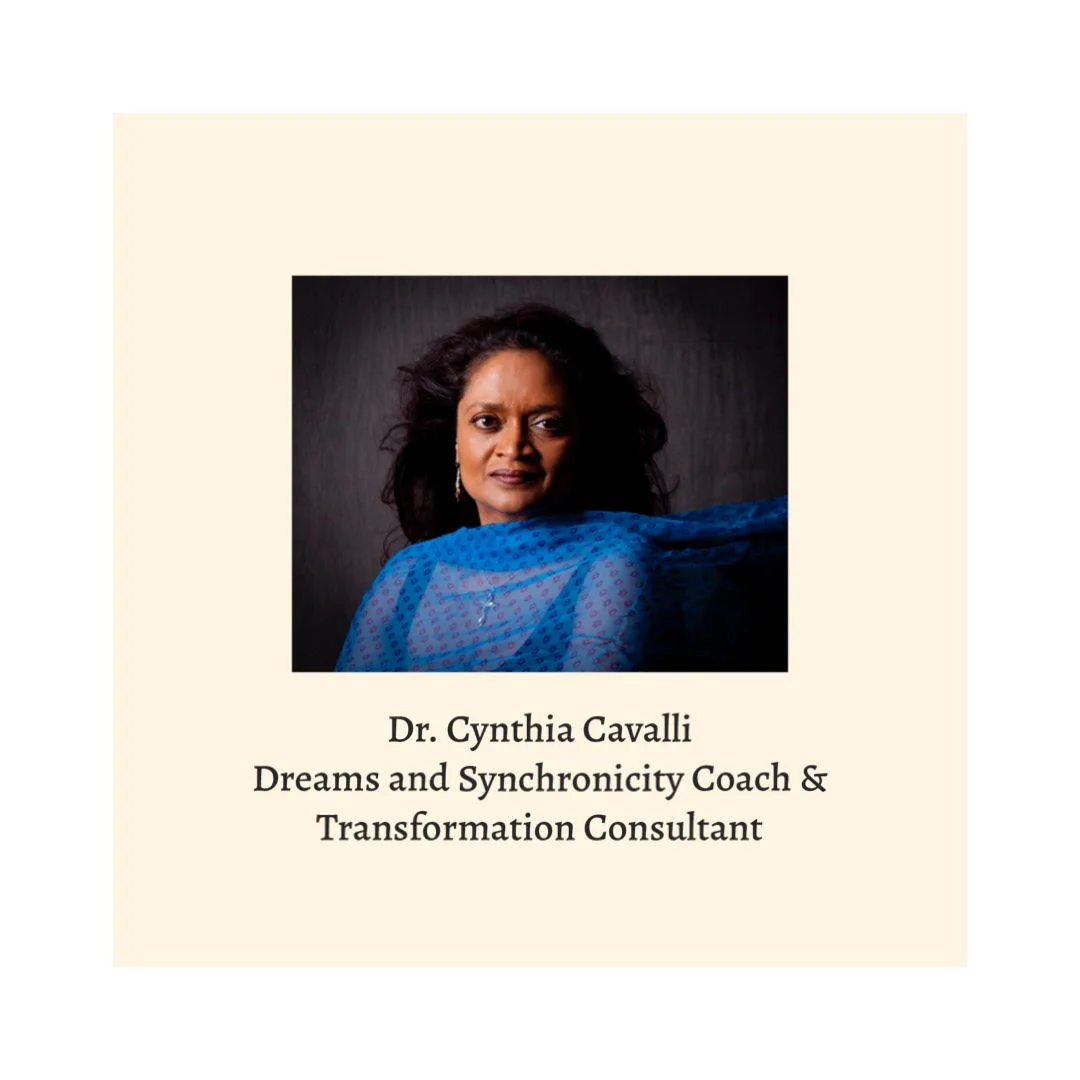
Dr. Cynthia Cavalli was an aerospace engineer for over 25 years.

Interestingly she comes from a solid background in science and she somehow ended up discovering a path which science has not been able to fully explain yet. 

Deeply passionate about inner development, Dr. Cynthia has developed a unique approach which integrates Jungian psychology, complexity science, shamanism, and mythology. 

Dr. Cynthia Cavalli is a dream and synchronicity coach and transformation consultant based in California.

She has published papers and book chapters on organizational and personal transformation and has conducted workshops and presentations at conferences internationally.

 She also participates as a board member for several non-profit agencies serving underrepresented communities.

Understanding Narcissism

This episode helps us gain a deeper understanding of Narcissism, and its roots. 
Narcissist people are often heavily shamed and bashed in the mainstream media, however this conversation invites us to develop a slightly different outlook on narcissism. Narcissism is often the result of certain kinds of challenges rooted in childhood and like all the other psychological issues, it requires understanding, healing and empathy more than shame.
  

We will be looking at this concept on an individual level, as a personality trait and a personality disorder,  how it can manifest in relationships, what personality types are more attracted to narcissists and who we become within a relationship with narcissistic people.
We will also be looking at how narcissism as a personality trait, can manifest in society and its impacts on the collective level.

About the Guest:

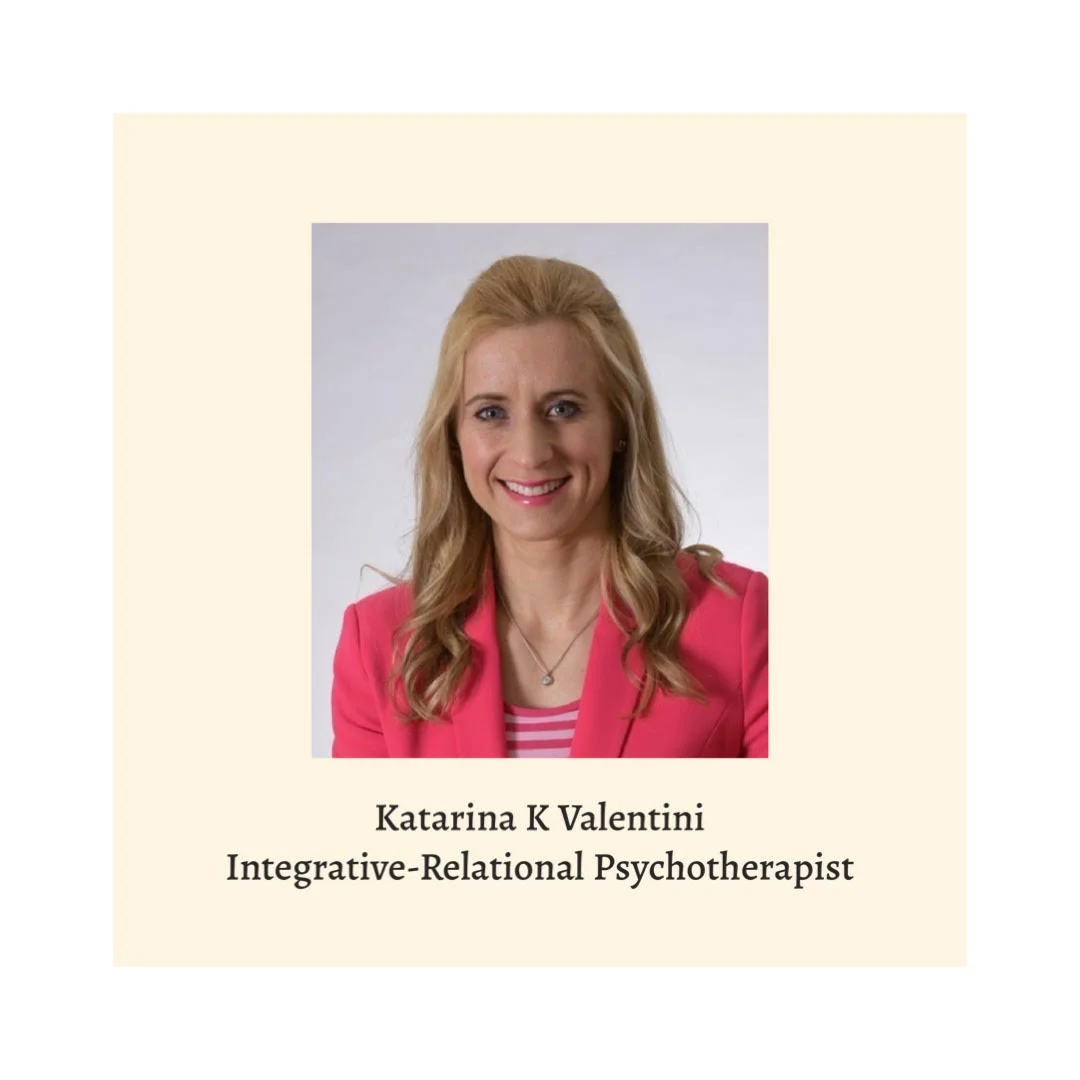
Katarina K Valentini is a licensed, qualified integrative-relational psychotherapist, psychotherapist trainer, a life coach, and a yoga and meditation teacher. She specializes in narcissistic and borderline disorders but is also qualified to work with clients experiencing other psychological problems. She is the author of a book on narcissism called: “My Narcissist and I. How to Find Happiness.”

She works in a private practice where she provides therapies and counseling to individuals, couples and groups, and organizes personal development workshops and training as well.

In her work, she integrates traditional psychotherapy techniques with other techniques and methods such as Brainspotting, EMDR, and Mindfulness. As an integrative-relational therapist she focuses on the therapeutic alliance between the therapist and the client, and tailors the therapeutic approach to each individual.

Episode’s Transcript:

Leila: Hello and welcome to another episode of the Bright Shift podcast. I am the Leila, the
Founder of Bright Shift and your host.
Bright Shift is an online platform where we offer online therapy, healing and meditation sessions
as well as workshops to individuals and workplaces. If you haven’t visited our website yet, I
encourage you to visit brightshift.co.
A while ago we asked you on our Instagram page what kind of topics you would like us to
discuss more and many of you mentioned narcissism. This was not a surprise to me as I knew
that when it comes to psychology and mental health, this is a really popular topic.
There are different ways to talk about narcissism. On the first part of this episode, we looked at
this concept on an individual basis and how it can manifest in relationships and on the second
half of the conversation, we took a look at how narcissism can manifest in society and how it can
impact us on the collective level.
My guest today is Katarina K. Valentini who is a licensed, qualified integrative-relational
psychotherapist, a psychotherapist trainer, life coach and a yoga and meditation teacher. She
specializes in narcissistic and borderline disorders but is also qualified to work with clients
experiencing other psychological problems as well.
She’s the author of a book on narcissism called “My Narcissist and I: How to Find Happiness”.
She works in a private practice where she provides therapies and counseling to individuals,
couples and groups and organizes personal development workshops and training programs.
In her work, she integrates traditional psychotherapy techniques with other techniques and
methods such as brainspotting, EMDR and mindfulness. As an integrative-relational therapist,
she focuses on the therapeutic alliance between the therapist and the client and tailors the
therapeutic approach to each individual.
Hi Katarina. It’s a pleasure to have you here with me today.

KV: Hi Leila. Thank you for having me. It’s great to be here.

L: So let’s start by asking you, is narcissism a personality trait or a pathological disease?


KV: Well, I’m always having a little bit of difficulty with narcissism being described as a
disease because in the DSM classification, narcissism or narcissistic personality disorder is
qualified as a disorder. So labeling it as a disease might be, I don’t know, putting a very negative
connotation to the term “narcissism” which already has quite a negative connotation.
So I would rather talk about a disorder with people who have let’s call a pathologic narcissism or
as some therapists and authors claim and think, it’s perhaps better to call narcissism as a
personality not only disorder but perhaps an impairment in functioning or a disruption in
functioning of an individual I think it’s less labeling. It puts a lot less prejudice on narcissism because if we label something as a disease, it immediately gets a very negative connotation and a disease is something that’s perhaps incurable. In fact there are no cures or magic pills to do away with narcissism. So let’s
stick with personality traits that are typical for narcissists if there is a pathological narcissism
present and that is called a disorder. But apart from that, I would say that narcissism is just a trait
people have, those who have difficulties in relating to people who have some impairments in
cognition, in experiencing emotion and stuff like that.
So how do we recognize a narcissist? Well, usually narcissists are very flamboyant. When they
enter the room, you notice them. It’s almost impossible not to notice them and we actually
recognize them by their external behavior. That’s the first thing that we notice. Then we also
recognize them by what they say because they are very confident, very self-assured. They use
terminology that is not perhaps very well-known to other people. They sort of present themselves
as experts, as know-it-all people and of course you can also recognize them in the way, how they
engage in interpersonal relationships.
They’re very skillful in that respect. They have almost no difficulties entering into new context
with people. They establish friendships very easily. They are great interlocutors, very intelligent,
bright, funny, amusing, charismatic. So those would be the traits that narcissists are most famous
for.

L: I see. And are narcissists made or born? What are the attitudes of parents that can potentially
turn their children into narcissists or how could you describe an environment that a narcissist
grew up in?

KV: Well, actually there are two theories. We have the so-called nurture and nature theory.
Some people believe that narcissists are born. I disagree with that because I think narcissists are
made. So I would say it is a nurture issue, meaning that narcissists are basically made in the
environment that they grow up in and the environment encompasses not only the physical
environment narcissists live in but also all of the people who interact with them.
Of course some people are born more of an introvert type. Others are more extrovert and people
who are very introvert will highly unlikely become narcissists because they don’t have it in them.
So temperament is very important because if somebody is very open, extroverted, very goal-oriented, who likes the attention, people like that are much more prone to narcissism. It doesn’t mean that they will become narcissistic but somebody who prefers to be alone, read a book
somewhere in the corner doesn’t want to interact with people. That kind of a person really
doesn’t have much of a potential to become a narcissist.

L: Or isn’t looking for attention.

KV: Yeah, exactly because narcissists love attention. They crave attention. They emotionally die
let’s say if they don’t have enough attention.

L: I like your outlook when you mentioned that it’s probably something that we are not born
with. So do you think it’s the way we grew up, how our parents treated us or some other external
factors involved that can turn people into narcissists and if yes, what are they?

KV: Well, it’s definitely the environment, more specifically our parents or people who are very
important to us who we look up to because when we are babies, we don’t know anything about
the narcissistic traits. If you look in the narcissistic traits or characteristics, they are all
characteristics, ways of thinking, experiencing emotions, behaving that are taught.
When we are born, we seek attention when we are very little, when we cannot take care of
ourselves, when we are hungry or we need our diapers changed or something like that, when we
need comforting. But when we grow older, we usually seek attention. So if we are comparing
babies and adults, it’s not the same kind of attention that they are seeking and they are not
seeking it for the same purpose. When it comes to narcissists, yes, definitely they grew up in an
environment that was encouraging a future narcissistic behavior.
So when narcissists were little, their mothers, predominantly mothers or the significant person
who was very much involved in the upbringing of the narcissist were paying either too much
attention on the child or too little attention because if they paid too little attention, then the child
had to do everything possible to attract the attention of the parents.
If they were sort of swamped with attention, if all of the focus was on the narcissist, if the
narcissist as a child was the focus of everyone’s attention, the center of the universe, then of
course that is something that a narcissist will expect to receive from other people when they
grow up.

L: So then you believe that it’s mostly rooted in the way how our childhood went. Is there any
age in childhood that you have in mind when you think it’s related to our childhood? Could it be
related to our attachment style from since when we were infants or it could be a little bit later on,
like when we were maybe three, four, five, six, seven years old?


KV: Well, usually narcissism develops or starts developing around the age of three. I’m not
talking about the development of the narcissistic personality disorder. You have to be an adult to
be diagnosed with that. But when children are very little or if we’re talking about babies, all of
them need a lot of love, a lot of attention, care, affection, nurturing, mirroring from the parents.
That’s very important because babies need mirroring to actually know what they are feeling
because they don’t have words to express what they are feeling.
So when we are talking about narcissists as babies, they either had too much or too little of the
love, care, attention and so on and so forth and it often happens with narcissists that love and
attention, care were in a way conditioned on narcissist’s performance. That’s why narcissists
always try to be the best, to be perfect, to know everything because in a way, narcissists as
children were perceived as an extension of their parents.
So if narcissists excelled, that shed a very positive light on the parents as well and this was the
only way for the child narcissist in the making to gain any attention, love and approval and have
a sense of being worthy of love.

L: Most conversations about narcissism in the media is usually negative in the sense that there is
almost no proper understanding of it because based on your explanation, if we understand it
correctly, we should look at it with empathy rather than shame.

KV: Yes, definitely. I mean I always feel a little sorry for narcissists because understanding how
narcissism developed in those individuals, you sort of have to feel sorry because either
narcissists as children were not given enough attention and they had to really strive to just make
an impact on the parents to be noticed or they were conditioned and they had to perform.
So in a way, again, we’re talking about mothers who were projecting their idealized version of
themselves on the child and in that very important phase of separation and individuation that
happens during our first year of life, narcissists actually didn’t have a possibility to develop their
own self because they were just mirroring what their mothers wanted them to be.
So when they get to the age of about three, when they’re in that omnipotent phase, when children
start to feel a bit more secure on their feet and everything is sort of delivered to them and they
think that because they have magical powers and think of something and that just manifests, not
understanding that it’s actually parents who cater to their needs.
They believe that they are truly omnipotent and at the age of three, that’s the grandiose period of
development. If narcissists are allowed to just demand everything, all the time, and if nobody
ever sets any boundaries and in a way frustrate their demands, then they think that the world
really does revolve around them, that the world is there to cater to their interests, wishes and
desires only and immediately. So that would be the key moment in the development of a child
around the age of two to three.


L: OK. And what percentage of society has narcissism in the form of disorder? Are there any
numbers available?

KV: Well, there are figures available. About six percent of the male population and about four
percent of the female population is supposed to have the narcissistic personality disorder. I say
supposed to because those are only figures that were acquired at mental health clinics.

L: OK.

KV: And you know that not everybody gets help, not everybody goes through a psychiatrist to
get diagnosed. I would say that the percentage is probably higher.

L: Yes, probably.

KV: But again on the other hand, you know, if you ask somebody, “Do you think that you are a
narcissist? Do you consider yourself to be a narcissist? Do you have any narcissistic traits?” I
don’t think many would admit that they do have them.

L: Oh, yeah, that’s a really good point. So are they aware if someone has narcissism as a
disorder? Are they usually aware that they have it or not? Like do they have that self-awareness
or probably not?

KV: Probably not. They are the way they are. I mean narcissism has a very, very negative
connotation nowadays in the society but narcissists can also be very successful. They are very
popular. They can be great leaders. But when we are trying to diagnose them, of course we look
at the typical narcissistic characteristics. But mind you, the DSM classification clearly stipulates
that if somebody is to be diagnosed with a narcissistic personality disorder, that person has to
fulfill five of the nine characteristics.
Again it has to be as it’s stated in the DSM, a pervasive pattern of grandiosity, need for adoration
and lack of empathy. So pervasive, it means that it has to be present all the time. It’s not just a
one-off thing or every now and then or during certain periods.
So narcissists really have to display at least five of the following nine traits to be diagnosed as a
person with a narcissistic personality disorder. For example, narcissists have this really strong
sense of self-importance. They exaggerate everything that they do. They exaggerate their
achievements and their qualities. They have to be the best. They present themselves as the best,
the only ones who know anything about anything and they are very competitive as well.


So that’s also the reason why they exaggerate everything that they do. For example if you said
that you went to one of the best restaurants in town. Then the narcissist will say, “Yeah, yeah, I
traveled there like three years ago and now that’s not the best one. I went to the best one and it’s
that one,” you know.
So they feel very, very important. That’s why they also require excessive admiration from other
people and attention from other people because they believe they are the center of the universe.
Everything has to revolve around them and if all of the attention is not focused on them, they sort
of feel rejected. They desperately need to have other people’s attention and they’re also what
they call preoccupied with fantasies of unlimited success, power, brilliance, beauty, ideal love.
Even if they don’t achieve it, they always strive to achieve the very best. Sometimes they
succeed. Other times they don’t and when they don’t, they feel really bad about themselves. It
has a very negative impact on their self-image and they also believe that they are special, in a
way unique. So only other special and unique people can understand them. That is also the
reason why they like to hang out with celebrities, people in power, people who are wealthy.
They don’t like to mingle with the so-called common people, ordinary people living their normal
lives, boring lives to narcissists. They also have a very strong sense of entitlement and that’s
something that stems from that developmental age because if narcissists want to get something,
then he demands that other people fulfill that request or wish. So this very strong sense of
entitlement is present everywhere. If a narcissist wants to date a certain person, he or she will
chase that person until they get it.

L: They cannot take a no.

KV: No, no, they cannot take no for an answer. I mean eventually they do because they lack the
motivation to perceive a goal for a very long period of time. They want things immediately.
That’s that sense of entitlement. I want it. I’m entitled to it and you will deliver it for me
somehow. That’s their reasoning.
Also narcissists are very envious of other people. They’re jealous. They’re very competitive.
However, when you talk to them, they will try to convince you that other people are actually
jealous of them, not the other way around and if somebody is more successful than them, they
don’t feel OK in such a situation. They don’t like competition. They want to be the best always
in everything that they do.
Also they are very exploitative in relationships. That’s another negative trait of narcissists.
Whenever they enter a relationship or establish a relationship with somebody, they usually do it
because they have a hidden agenda or because they believe the other person will cater to their
interests or fulfill one of their wishes. That’s why their relationships are frequently very
superficial. They do not engage in in-depth relationships. They don’t like emotional closeness because they fear being rejected. They fear being exploited even though that’s what they do to
other people.
Another trait that is often mentioned in relation with narcissists is that they lack empathy. Now I
don’t know if they truly lack empathy or if they lack sympathy because narcissists are excellent
manipulators. So if you want to manipulate somebody, you have to at least understand how the
other person is feeling, how the other person is experiencing a given situation. You have to know
which buttons to push to get what you want.
So I would say that narcissists have what we call a self-interested empathy or an intellectual
empathy. On the cognitive level, they can certainly understand what the other person is feeling
and experiencing but they have difficulties relating to that emotionally not because they had zero
emotions but because they are afraid to show their vulnerability.
This is where I think many of us are making a mistake in judging narcissists too harshly because
many of us forget that what we see on the outside, what narcissists are presenting to the general
public is actually a mask. It is a defense mechanism and if you watch a given narcissist how he
or she interacts in different groups of people, you will see that they can put on a different mask
for a different target audience.

L: So they can be quite intelligent emotionally.

KV: They are very emotionally intelligent. They are intelligent in general. They are well read.
They are charismatic. They know a lot about many issues. So when you engage in a conversation
with them, you actually get a feeling that you’re talking to somebody who’s very knowledgeable,
experienced, even though they don’t really know much about the subject.
What’s in a way hiding beneath this narcissistic mask is a very lonely, insecure, vulnerable child,
the one that was so strongly seeking the attention and approval and love from their parents. Not
only mothers, fathers too, and that’s why narcissists are afraid of entering into close personal
relationships, close emotional relationships because they fear that the other person will in a way
discover what they are really like and will not like them and will then walk away because many
people are attracted to this narcissistic persona, the charisma, the wealth. They’re well-dressed.
They like to travel to exotic destinations. They like eating in fancy restaurants.
Many people are attracted to that but deep down, narcissists are very insecure and they are in a
way overcompensating that insecurity, fear of rejection, fear of abandonment, the underlying
sense of depression by being too confident. They don’t like surprises because if narcissists lack
information, they feel insecure. If they lack information, they cannot manipulate you.
They don’t like the unknowns. Even the known unknowns are terrifying to them because they
always fear that somebody will discover that in fact they are charlatans. What they are presenting
to the public is not who they actually are. That’s why they have to have the upper hand in every
situation, in every relationship.


L: I would like to know how can we stop labeling everyone with narcissism. I think it’s the most
common thing that people talk about in relationships or associate their relationship problems to.
You also mentioned that. So I want to know why is there such a big misunderstanding when it
comes to narcissism. Which traits and people are being misunderstood for narcissism?

KV: I think that people are often mixing narcissistic people and histrionic people. If I
oversimplify things, most actors are actually histrionic because they like performing. They like
to be the center of attention. They are the so-called drama queens. Relationships they enter into
are also superficial. They frequently pretend to be best friends with, I don’t know, celebrities
they had met once perhaps and do not really know.
But the difference between a histrionic and a narcissistic person is that a histrionic person will
not engage in interpersonal relationships for their own benefit. In the sense they will not aim to
take advantage of the other person for their own benefit while narcissists will do whatever it
takes to reach the set target.

L: And how about some other traits? Like do you think sometimes for example we’re just being
selfish but we misunderstand that with narcissism?

KV: Well, being selfish or egotistical, that’s the first thing people think of when you mention
narcissists and narcissism.

L: Yes.

KV: But then you also have to ask yourself, is that other person really being selfish or is that
other person just not willing to fulfill what you want them to fulfill? A healthy dose of egoism
and egotism is actually good because if we have a healthy dose of selfishness, then we can
prevent other people from exploiting us.

L: OK. So there is such a thing as a healthy dose of narcissism, is there?

KV: It’s called a healthy narcissism. Like we said, narcissists are very intelligent. They are
charismatic. They are great leaders. They are very target-oriented. They will really put in a lot of
effort into achieving what they want.
Now if we take all of those qualities and use them for the benefit of the general public or for
general interest, not only for the individual interest of a narcissist, then all of these characteristics


can of course be very beneficial because if you have for example a CEO that is intelligent,
charismatic, reads people well, handles interpersonal relationships well, is target-oriented, is
willing to reward people, to compliment people, encourage them, motivate them, then this is
great for the company if everybody benefits.
The problem is that when narcissists are in a high level position, let’s say in that same CEO
position, narcissists will use all of their charms and manipulative skills to gain personal
advantage. They will not share the benefit with the rest of the team or even if it is a team effort, it
will be the narcissist who then takes credit for everything that was done.

L: Yes. Well, definitely we will talk more about that shortly when we talk about how narcissism
can manifest in societies. So what are the healing paths available for someone with narcissism?

KV: Let’s say that it can be toned down or we can work on the characteristics that are most
disruptive not only for the relationships narcissists are in but also for the lives of narcissists
themselves.

L: So you can work with people who have narcissistic personality disorder.

KV: I mean we can definitely offer them help. We can help them change. The only problem is
that narcissists don’t often come to therapy. They believe there is nothing wrong with them.
Everything is wrong with everybody else. Narcissists in their minds are perfect.

L: So that’s the issue …

KV: They only come to therapy when something goes really bad in their lives. Either their
relationship or marriage falls apart or they lose their jobs. Consequentially they will also lose
their income and all of the high-flying life that they’re leading or if they fall ill, seriously ill.

L: What do you do when you’re in a relationship with someone who has been diagnosed with
narcissism or narcissistic personality disorder, even if they have not been diagnosed but for
example – you know, for someone who has been listening to this podcast and they could spot all
the signs that you mentioned in their partner, in their romantic partner. I think it will be a very
challenging relationship. But what do you recommend?

KV: I mean relationships with narcissists are definitely challenging. They are not the easiest
ones to have. They can be very exciting. They can be great but there are moments where those relationships can be really painful and disappointing as well. So if anyone is in a relationship
with a narcissist, then my advice would be check which of the characteristics really bother you.
Try to understand why the narcissist is acting the way he or she is towards you. Are the two of
you triggering each other? Because narcissists often attract people who share the same wounds.
You know, old wounds from childhood but they attract partners who are sort of openly
discussing those wounds and want to heal them while narcissists deny having them.
Because they have similar wounds and similar past experience, painful experience, they know
how they are feeling and they also know where to poke the other one when they’re having an
argument. So if both partners in a narcissistic relationship go to therapy and work on their past
issues, old wounds, unresolved problems, it will become easier because they will no longer be
mirroring each other’s pain.
But if somebody is having a lot of difficulties with narcissistic characteristics of their partners
and if the partners are unwilling to change them, then I guess the only way is to leave.
Otherwise, you can just suffer and play the victim.

L: OK. And could you tell us a little bit about your book? You’ve written a book about
narcissism.

KV: Yeah, I’ve written a book on narcissism called “My Narcissist and I: How to Find
Happiness” because I’ve had a lot of experience with narcissists in my personal life, in my
personal life and of course I am in a relationship with a narcissist. So I do know what it’s like to
be in a relationship with a narcissist. I do know that narcissists can change. But in this book, I’m
actually trying to shed a slightly different light on narcissism. Because of all of the bad press that
narcissists have been getting, I thought it would be useful to at least open up another venue for
exploring narcissism.
I wanted to present a different side of narcissists, the vulnerable side, the insecure side, that
many people just overlook because they are so fixated on the narcissistic mask and the arrogant
and haughty behavior that is typical for narcissists.
I’m describing the different combinations within a narcissistic relationship. So what kind of
people get together to form a narcissistic relationship, why that happens? How can things be
resolved in a positive way for the relationship? What to do if you want to leave a narcissist but
you are emotionally so hooked to a narcissist that you’re actually incapable of leaving regardless
how much you want to do that?

L: OK. So that’s a great resource actually for people who are in relationship with a narcissistic –
people who have narcissistic personality disorder.

KV: Many people don’t even know that they are in relationship with narcissists.

L: Yeah, absolutely. If you don’t have this kind of information, you wouldn’t know. Where and
how can they purchase your book?

KV: It’s available on Amazon.

L: And on your website perhaps, right?

KV: No, it’s just on Amazon you can find the book. Yeah.

L: OK.

KV: And the print edition is at BookBaby in the US.

L: Great. Can you tell us who gets involved with narcissists more in a relationship or what kind
of personalities do narcissists attract?

KV: Well, based on my private practice and the people I have worked with and the material I
have read, I came to the conclusion that there are basically three types of people who get most
attracted to narcissists for different reasons.
One type of people are empathic people because narcissists are very interesting, attractive, but as
an empath, you can definitely sense what is hiding beneath that narcissistic mask. Empathic
people do have their antennas pretty well-calibrated and empathic people actually can sense what
narcissists need deep down.
Maybe they sometimes fulfill the needs that narcissists themselves didn’t know that they have.
For a while, relationships like that work perfectly because narcissists is showering the empathic
partner with a lot of love and attention. You know, at the beginning of a narcissistic relationship,
things are going really well.
Narcissists are attentive. They buy you presents. They take you places. They praise you. They
tell you how wonderful you are and an empath likes that as well because they like to be
appreciated and narcissists also feel very well in a relationship with an empathic person because
the empathic person is in some kind of a subconscious way fulfilling many of the emotional
needs of narcissists without narcissists having to explicitly ask for those needs to be fulfilled.


But things got complicated when the empathic person wants to establish greater closeness with
the narcissist. That’s where narcissists get afraid because they don’t want anybody to know about
their vulnerability, insecurities, negative self-image and in that precise moment, narcissists start
withdrawing from the relationship and the empathic person is sort of begging them to come back
and doing everything they can to win the narcissist back.
So empath and a narcissist, that’s one of the most typical relationships. Then we have an overt or
open narcissist and a covert narcissist. This can work very well for quite a long time as well
because both narcissists, the open or the overt and the covert have the same approach to life.
They both believe they are the best. They are entitled to everything. They like the luxurious life.
They establish a fairly superficial relationship. They are not too intimately emotionally close and
connected, so nobody is at risk of being discovered or being hurt or being abandoned.
It works for so long until the covert narcissist decides to shine in the presence of the overt
narcissist. Covert narcissists love to bask in the attention that overt narcissists receive and they
don’t have to expose themselves in any way because they’re afraid to do that. So they benefit
from all of the attention that the overt narcissist is getting.

L: But could you tell us what is the difference between overt narcissists and covert narcissists?

KV: Overt narcissist is your typical narcissist, in your face, loud, opinionated, know-it-all. Look
at me. I’m the best. Everybody should be focusing on me. The covert narcissist is the one who
also believes to be the best, the brightest, the wealthiest, the most successful. It’s just that other
people haven’t noticed that yet. So they are sort of expecting everybody to recognize all of those
qualities they believe they have but nobody does that because covert narcissists are just standing
on the sidelines, waiting to be noticed and seething with anger because nobody is noticing their
greatness.
So when a covert narcissist enters into a relationship with an overt narcissist, then they bask in
all of the glory and grandiosity and the tension that the overt narcissist gets because finally, the
covert narcissist, when they are in relationship with an overt narcissist receive that attention as
well without having to do anything for it.
Once they want to steal the spotlight, even if it happens only once, then the overt narcissist will
not like it. There can be room for only one in a narcissistic relationship. Only one person can get
all the attention.

L: And who else? So empath, they get attracted.

KV: Overt and covert narcissists and then we have the most explosive combination of all,
borderline and a narcissist. Narcissists and borderline people, be it people with borderline


personality disorder or some borderline characteristics, actually share many traits like we talked
previously.
What narcissists are feeling and experiencing deep down are an underlying sense of depression, a
fear of abandonment, a fear of rejection, a very poor self-image, a very low level of self-worth.
But narcissists are experiencing all of that deep down. They don’t show it openly.
Borderlines on the other hand are experiencing all of that as well and since they have such a
great fear of being abandoned and rejected, borderlines will literally do whatever it takes to not
be abandoned and just like with empaths, with borderlines too applies that at the beginning, it is
great because narcissists are showering them with love and attention and devotion and
everything. That’s what a borderline person needs because borderline people are very insecure.
They fear being abandoned. They fear being rejected and when narcissists are giving them all of
the attention and stability and security and they’re so self-assured, borderlines feel great.
But as soon as the borderline senses that the narcissist is withdrawing and narcissists start doing
that when people are starting to get emotionally too close, then the fear of being rejected
increases significantly with the borderline and that’s when borderlines go sort of crazy and they
do whatever they possibly can to win back the attention of the narcissist and that freaks the
narcissist out because they don’t like people crawling after them, begging them. They find that to
be a humiliating behavior and they also think, well, if somebody like that loves me, then there
must be something wrong with me. That’s why they often leave borderlines pretty fast.

L: Could you tell us a little bit about who do we become when we are in a relationship with
narcissistic people?

KV: When we are in a relationship with a narcissistic person, we very often start behaving in
peculiar ways, ways that are not natural to us. Why? Because narcissists are often playing mind
games either consciously or subconsciously. When we are in a relationship with a narcissist, we
often don’t know where we stand, what is going to happen. Does the narcissist love us or not?
Are we good enough or aren’t we good enough? A narcissist, because they are such great
manipulators, they also frequently lie.
So for example, I could be having a conversation with my narcissistic partner and he would say,
“Yes, let’s meet tonight at 6:00 at restaurant XYZ.” I go to the restaurant XYZ at six o’clock. He
doesn’t show up. Not for one hour, not for two hours. I go back home and then I say for example,
“Well, I’ve been waiting for you at six o’clock. We had a date,” and he would say, “No, we
didn’t have it. You have mixed the date up or you have mixed the name of the restaurant. I never
said that.”
You start questioning yourself. So have I really misunderstood? Am I crazy? And this is just one
of the most common problems. Things like that can happen at a deeper psychological level and
also gaslighting. That’s another typical trait associated with narcissists. So if you find yourself
behaving in ways that are unfamiliar to you, if you sometimes get actually scared of yourself and your reactions, there is a very high probability that you are in a relationship with a narcissist
because the narcissist knows exactly which buttons to push to tick you off because they are
feeling something negative inside and they don’t want to feel it and they project it onto you.

L: On this second part of our conversation, I like to talk about narcissism more in terms of
narcissism as a personality trait and as I was researching about this topic for this interview, I
came to know more about it and figured out that the problem with narcissism is not just how it
manifests in relationships but it is also really detrimental to the way a narcissist relates to the
world, to the environment, the way they do business or the way they run a business.
The way they relate to the outside world can be really dangerous. So let’s look at how narcissism
manifests itself as a trait in business, in the workplace, even in the healthcare and even
environmentally.

KV: We do have different types of narcissism. Authors classify these types differently but they
all have some common traits because we have a whole spectrum. We have narcissistic moments.
We have a narcissistic style, a narcissistic pattern. Only then do we come to the narcissistic
personality disorder.
Even within the narcissistic personality disorder, we can have for example covert narcissists. We
can have overt narcissists. We can have toxic narcissists. Usually in business we find a lot of
toxic narcissists because they are so success-driven that they would do whatever it takes
regardless of the expense to get to the target that they have set.
That has a very detrimental impact on the entire team or on the employees within a company
because bosses like that are very demanding. They are not very rewarding. They usually find
fault with everybody if things don’t go according to the plan. Everybody else is to blame, not the
person who’s in charge, the narcissist, and it can be a very difficult and toxic environment.
Flaws are not permitted. People have to be perfect. They have to perform well all the time. They
have to excel. They have to be better than everybody else.

L: Yes. And we know that we live in an era where there is almost obsession about the self.
There’s so much talk on self-empowerment, self-love, self-worth, self-care. It seems like it’s all
about the self and I understand where this comes from and why at times it’s needed. But what is
the difference between narcissism and the genuine sense of self, genuine sense of self-love or
just a healthy sense of self and not being obsessed with the self?

KV: People who have a healthy sense of self and the sense of self-worth are OK with who they
are. They are not comparing themselves with other people. They are not seeking recognition
from other people or excessive attention and admiration and deference from other people. They are OK with who they are. They try to be the best version of themselves but they are fine just the
way they are.
When we are talking about narcissism, narcissists are not OK with who they are. So when we are
talking about self-love, the sense of self-worth, narcissists just don’t have that in them. That’s
why they need so much admiration and attention and deference and praise from other people.
They need what we call the narcissistic fuel because without that, they cease to exist.
That inflated false self that narcissists are presenting sort of collapses. It deflates. It disappears.
That’s why narcissists constantly need attention. They need attention to feel alive while people
who have a healthy sense of self-worth do not need the approval and admiration and validation
from other people. Narcissists do.
Even if a narcissist for example achieves something important, something major, it will not have
any inherent worth to them unless other people praise the narcissist for what he or she has
achieved.

L: And how about social media platforms? Do you think that social media aggravates narcissism
as a personality trait in individuals and in us as a collective? I’ve heard some psychologists
referring to social media as the cocaine of narcissists.

KV: Probably because everybody is so self-obsessed nowadays. It’s me, me, me and nobody else
but me. That cannot be healthy. I mean it’s OK to have a good sense of self-worth. It’s good to
be confident. It’s good to be OK with who you are, to be proud of what you have achieved or of
the qualities that you have.
But if you are just sort of portraying or displaying all of that so that other people would say that
you’re OK, well, then you have an issue because that’s really not a healthy sense of self-
confidence or self-worth. With social media and the selfie culture, I think that we as a society are
going in a direction that is really not very good because everybody is so self-absorbed and self-
obsessed that they just forget that the rest of the world exists as well because we still live in a
community. We still have to establish relationships, cooperation, closeness, connectedness,
support, solidarity, ethics, morality.
Those are I believe the values that help knit a community together. If everybody is just focused
on himself or herself, then we as a society will not progress much and we will not get very far.

L: Yes, I agree 100 percent. So do you think in today’s world narcissism is somewhat rewarded
in society? For example we talked about it earlier a little bit. The way the concept of competition
is usually taught in business schools or how sometimes society encourages being at the top at all
costs in general. Whenever we see the mentality that prioritizes personal benefits over the greater
good, I guess we can see the footprints of narcissism.


KV: Yes, definitely and it’s encouraged in today’s society. Individuality, success. Failure is not
even an option even though failure is a normal part of life. We cannot always just be better, reach
higher, go fast.

L: Absolutely. Yes.

KV: There is a limit and even if limits can be pushed upwards, we’re always on a curve. It’s not
a linear line going upwards only and it is true that society demands us to excel, to be perfect.
Flaws are not allowed anymore. Everybody has to be picture-perfect. Everybody has to be the
best at what they do. You cannot fail at anything because you’re immediately discarded from the
society as a total failure, which is not true. We all have our good moments. We all have our bad
moments. Sometimes we succeed. Sometimes we fail. But the important thing I think is just to
get back on your feet and keep doing whatever it is that you’re doing and like doing.

L: I would like to also talk about narcissism and spirituality a little bit.

KV: That’s an oxymoron, spirituality. I wish narcissists were more spiritual.

L: Yes, because it sounds like narcissism goes against all the spiritual values that encourage
sacrifice, inclusiveness, generosity and so on and I think in general narcissism kind of distorts
that pure sense of self that all the spiritual outlooks of the world are inviting us to see or to
identify with. What are your thoughts on that?

KV: Well, narcissists are using other people to achieve what they want to achieve. So the
relationships they’re entering into are not subject relationships but object relationships, meaning
you are there for me to use you to achieve whatever I want to achieve. They don’t really take into
consideration other people’s needs, interests, desires and perhaps that’s also the reason why
nowadays we are reading and hearing so much about toxic narcissism, toxic narcissistic
relationships, abusive relationships.
Yes, that is on the one extreme of the spectrum. But we also have to take into account the other
part of the extreme. Like we have narcissistic moments. Perhaps if narcissists heal their old
wounds and no longer had the need to perform for other people to be liked and loved and if they
allow themselves to be more vulnerable, then yes, they would be more at ease with themselves.
There would be less competition. There would be more cooperation. They would be encouraging
the traditional values, let’s call them. You know, cohesiveness, solidarity, offering a helping
hand.
You know, narcissists frequently find some kind of joy or pleasure when they see other people
failing, not being as successful as they would like to be or even hurting because it prevents them
from feeling their own pain.

L: So as a psychologist, what do you think we can do as individuals and as a society, to gravitate
more towards these values that you mentioned, inclusiveness, humility and humbleness rather
than narcissism?

KV: Humility is not a term used by narcissists very frequently. I don’t even know if it’s in their
vocabulary or if they know the concept of humility. But if we as a society want to progress more
in that direction, I think we need to start nurturing those qualities and values within ourselves
first.
Then within the relationships we form with our family members, partners, friends, colleagues
and I think also the educational sector could do a lot in that respect because if children are taught
that the only thing that matters nowadays is to succeed and success is measured in terms of your
wealth, then that’s what they will be striving for. If on the other hand children in schools and
kindergartens and within families are told that other values are more important, that money isn’t
everything, fame, success, it’s not everything, that there are other more important human
qualities to nurture, then that’s what will thrive. If we focus only on competition, on defeating
the other, on being successful all the time, then we neglect the so-called spiritual values or
traditional values.

L: Beautiful, beautiful way of explaining this. As we are approaching the end of the podcast, is
there anything else that you would like to share with us?

KV: Well, I do wish that our podcast today will shed a slightly different light on narcissists. I’m
not defending them, far from them. I know narcissists can be horrible. But if we just take the
effort and take a sneak peek underneath that narcissistic mask that they are wearing, we will
perhaps see and feel the person, the vulnerable, terrified, rejected little individual that is hiding
beneath. Really because narcissists can be really wonderful people. They’re fun to be with.
They’re exciting. They like to go places. They’re really not dull.

L: They’re not boring.

KV: Yeah, they’re thrilling. It’s just that as soon as they feel threatened, as soon as they get the
impression that the other person will now discover them and see that actually they are loving,
vulnerable people, then they will leave them. That’s why they don’t want to be open and
vulnerable because they fear that they will be rejected and abandoned.


If we understand that that’s what narcissists are like deep down inside, then maybe we will be
less judgmental and not only that. If we understand why narcissists are acting the way they do, if
we understand that that’s just their defense mechanism, then we will also perhaps stop taking
things so personally because when we are in a relationship with narcissists, we often get the
feeling that there is something wrong with us, that we are not good enough, that we are not
worthy of love, when in fact these are just projections or a projective identification that the
narcissist is projecting onto us.
So when you are in a relationship with a narcissist and you’re experiencing all of these negative
emotions and thoughts, take a pause and think. Is this really something that I’m feeling? Is this
really something that I think of myself or is this something that I’m picking up from my
narcissist?

L: You shared really interesting information about this topic on this podcast, and I know that
narcissism is a topic that many people are striving to know more about. The main point that I
personally took from it was that we need to look at narcissism with more compassion and
understand its roots. When we do that, it definitely changes how we look at this topic in general.
It was a really interesting and insightful conversation. Thanks so much for sharing your
knowledge with us on this topic.
KV: You’re welcome. Maybe just a final thought that just occurred to me.

L: Sure.

KV: When people come to therapy, they are frequently desperate because they have just
discovered that they are in a relationship with a narcissist. Until they had the term “narcissist” in
their mind, things were going fairly well in the relationship despite all the problems. But as soon
as people hear the word “narcissist,” or maybe my partner is a narcissist, their whole world
collapses because of all the negative publicity regarding narcissism. It is true that narcissistic
relationships are difficult but they are not impossible.
So if you are with a partner who has a narcissistic personality disorder or has just some of the
narcissistic characteristics, it’s not the end of the world. You can still make it work.
Relationships like that are doable, are manageable, can be very loving and exciting. So don’t
give up just because you think that your partner is a narcissist and because the society convinced
you that it’s let’s say incurable. Even narcissists can improve.

L: That was a really important point that you mentioned that it is possible to be in a relationship
with narcissists and there are ways to improve things. Thank you for adding that and it was a
pleasure. I really enjoyed having this conversation.


KV: Thank you so much. It was lovely talking to you and I think that we’ve opened up some
really important questions.

L: I think so too. Thank you.
And to our listeners, I hope listening to this episode has helped clear some of the most common
misunderstandings about narcissism. It certainly helped me to look at this concept in a different
light. Thanks for being here and see you next time.

Psychosynthesis: Psychology of Hope

On this episode Leila talks to Mahita El Bacha Urieta a therapist and a coach about “Psychosynthesis”. Psychosynthesis is known as psychology of hope and a psychology with a soul. Psychosynthesis is a unique and progressive approach to psychology. And is perhaps one of the deepest and most resourceful approaches in psychology. 

In psychosynthesis individuals with psychological challenges are not viewed as flawed or broken and are not referred to as “patients” but are rather considered as individuals who are filled with infinite potentials and opportunities for transformation.

About the Guest:

Mahita El Bacha Urieta is a licensed therapist and a coach, a registered member of the British Association for Counsellers and Psychotherapists. Mahita’s approach is based on psychosynthesis psychology which includes elements from Psychodynamics, CBT, Somatic experiencing, and mindfulness among many others. Mahita has a wide and extensive range of expertise and works with individuals with a variety of challenges. Having lived in many different countries around the world she is also familiar with and accustomed to various cultures and traditions, and speaks several languages including English, Arabic, French and Spanish.

Mahita offers psychotherapeutic counselling as well as life coaching sessions.

Depression- a portal to soul work

Depression is often talked about from a biological, psychological and pathological perspective. However, there are deeper levels or more subtle layers of depression that usually remain undiscovered. Depth psychology helps us to dig deeper into the underlying, deeper causes of depression. This framework doesn’t just provide us with temporary reliefs or symptom palliation, but it will lead us to uncover the meaning and the purpose of our dark nights of the soul.

On this episode, we have explored depression from a soul-oriented perspective. Could depression be a gateway into the greater passages that our soul intends us to go through? Or as our guest- Thomas Moore- suggests in his New York times best seller book ‘care of the soul’: could depression be a gift?

About the Guest:

Thomas Moore is the author of the number one New York Times bestseller ‘Care of the Soul’. Thomas Moore has written thirty other books about bringing soul to different aspects of our lives; including our relationships and culture, deepening spirituality, humanizing medicine, finding meaningful work, and doing religion in a fresh way. He has been a psychotherapist for over forty years .In his work, Thomas Moore brings together spirituality, mythology, depth psychology and the arts.

In his youth, he was a Catholic monk and studied music composition. He has a Ph.D. in Religious Studies from Syracuse University and has been a university professor for a number of years.

His work has helped many people around the world to live more meaningful and soulful lives.

You can find more information about Thomas Moore’s works on his website:
https://www.thomasmooresoul.com/

Episode’s Transcript:

Leila: Hi and welcome to The Bright Shift Podcast. I am Leila, founder of Bright Shift and your host.

At Bright Shift, we offer online therapy, workshops and meditation sessions. You can find us at brightshift.co
Today we’re going to talk about depression but from a different angle. Joining me on this
episode is Thomas Moore.

He is the author of the number one New York Times best seller Care
of the Soul, a book that we will also talk about on this episode.
Thomas Moore has written 30 other books about bringing soul to different aspects of our lives including our relationships and culture, deepening spirituality, harmonizing medicine, finding meaningful work and doing religion in a fresh way.
He has been a psychotherapist for over 40 years. In his work, Thomas Moore brings together spirituality, mythology, depth psychology and the arts.
In his youth, he was a Catholic monk and studied music composition. He has a PhD in religious studies and was a university professor for a number of years.
His work has helped many people around the world to live more meaningful and soulful lives.
You can find more information about Thomas Moore’s works on his website
thomasmooresoul.com. The link is also in the description.
Welcome to The Bright Shift Podcast Thomas. I’m a great fan of your work and I really appreciate and admire your approach. It’s a great pleasure to have you here today.

TM: Well, thank you for having me and I look forward to us being able to explore some work that I did many years ago but soul is very active for me.

L: Me too. Throughout the years, you have beautifully explained how important it is to integrate
the concept of the soul or soulfulness into so many different areas of our lives and this is really one of my favorite topics of all times.
In your work, you have also talked about depression from the soul point of view and depression for most parts has been viewed from the clinical and pathological aspect and there has not been
much consideration of the role of the soul in it.


But in your work, we see this unique and important approach that gives us a fresh and really different way of looking at depression. So I’m very excited to hear how do you define the soul in
your work and what is the role of the soul in depression.

TM: It’s very difficult to define the soul. I’ve been asked that question for 40 years and I never feel I can answer it very well. It doesn’t mean that it’s not something that is real and important
but it’s very mysterious. So it’s hard to say exactly what it is but I can say that it is the deepest part of ourselves. It goes beyond the self, the ego, the eye that I think that most of us understand
that we have things going on in us that we don’t control and feel a little bit alien to us.
We have emotions that come into our lives that we don’t really want necessarily or that we don’t certainly control. So there are things going on in the range of our life and in an interior way that
traditionally for thousands of years have been called the soul.
So the Greek word for that soul is ‘psychi’ which is like psyche we would say today. So when
we talk about psychology, it’s like ‘psyche-ology’. What we mean is something to do with the
soul but we don’t take that seriously.
So what I’m doing is not too foreign. It’s not foreign to psychology and it’s also something that has been talked about. The souls were talked about, as I say, for 2000 years at least by philosophers, psychologists and religious people.
I think today a lot of people think of it as a religious idea but I don’t treat it that way because I’ve studied a lot about the soul and most of the sources that interest me are from philosophy and
from – well, I don’t know, even art.
So it’s an old idea that I think is very, very rich even though it’s a little bit difficult to bring into
modern life where we like everything to be quantified and tightly defined.

L: Yes. So I would like to read this excerpt from your book Care of the Soul as it’s very much related to my next question.
“If we persist in our modern way of treating depression as an illness to be cured only mechanically and chemically, we may lose the gifts of soul that only depression can provide.”
and in the same book, there is actually a chapter called “Gifts of Depression” and this is really fascinating and interesting to me because most of the times when we approach depression, we usually want to know how we can get rid of it immediately.
But in your work, we see this new approach where depression has a message for us and we can
actually take something from it and in the same book you said, “Your symptoms are the raw
material for your soul-making. If you are having emotional problems, don’t automatically just try
to get rid of them. Look at them closely to see what your soul needs. Symptoms are painful and in need of tending and refining but they contain the essence of what you are looking for.”

So I would like to know how can we work with the symptoms?

TM: One thing we might do is look at the history of – look at people that have been important in our cultures. That when you look at their lives, you can’t separate out the good parts from the bad parts. I mean there were so many artists who were very depressed, many suicidal and many who committed suicide. Many really fine artists.
We have a couple of my favorite poets. Sylvia Plath and Anne Sexton committed suicide. So their depression was intense and we know in their lives and Sexton used to give a reading of
poetry and then check in at a mental hospital to recover.
So, you know, you can’t separate that experience from her life. That’s who she is and so it’s sad and it would be nice if we could have helped her more. I always feel frustrated. I wish we could help people like that much more.
But the fact is that’s who they are. So in a way, you can’t just look for the absolutely unblemished person, the person who doesn’t have any problems, and say, “Well, that’s the kind of person we want to be our artist or the person who’s going to give us their imagination.”
We have to look at them but we also have to look at ourselves and realize, yes, my life is imperfect. I’ve gone through some bad times. Most people have gone through some pretty tough experiences in their lives and those can be seen as part of what’s going on.
So if you have this kind of a whole picture of yourself and don’t try to look for the ideal or the clean. I think the hygienic, the kind of healthy self because nobody is completely healthy. If you take that further, you might realize that these experiences were very important for the people as they developed their creative work.
In fact in the 15th century in Europe, artists were said to have been born under Saturn which was the planet for the god of depression. So people then felt that artists in particular had this weight of depression to deal with. That’s part of their calling in a way of their work. They have to deal with that. They also recognize this is not my idea.
Way back then, at least 500 or 600 years ago, they recognized that depression actually is a channel to insight. That when you are depressed in those times and the fact that you might be at least in part a depressive person, you might be more accessible. You might be able to be more open to inspiration than the person who hasn’t had that experience. One reason is that depression takes you inward and forces you in a way to be a more inward person and that’s of course what a creative person is often. They often have this intense inward life and so in moments of depression, as painful as they are, they might be able then to create in a way, develop into the kind of person who can be very creative.

L: Do you think depression is a way that sometimes the soul chooses to kind of invite us to do the inner work?


TM: Yes, I think that’s a very good way to put it. Invitation, I like that. What if you thought of depression as an invitation to do more inner work?

L: Yes.

TM: What my colleagues and I often say is we go with the septum or go into it. You were alluding to that. So we do that because that is a way of going into that part of yourself that might be a bit wounded but is – for that reason, might be more open to explore life in a fresh way because when you’re happy, I always say – as a psychotherapist, I never had anyone call me and say, “Life is so good. I need to talk to you.”
They never put it that way. It’s always things are really going bad and so I need to see you. It’s a similar kind of feeling in yourself that when things are not going well and you’re feeling
depressed, you are motivated to do some inner work. Yeah.

L: And speaking of symptoms, I remember in one of your interviews you mentioned that you were working with a man who had a habit of stealing and you actually worked through this habit with him and through that process, you helped him find his purpose in life. Working with the symptoms, trying to understand them is a really interesting way of working with clients.
I was wondering, are there any examples that you could give us, a client that you helped them to find their purpose through their symptoms?

TM: I had a client many, many years ago who came to me, a woman who told me she wanted to quit smoking. She said, “I don’t want any of this soul care. I don’t want that.” She said, “I’m not interested in that. I just want to stop smoking.” She said, “Can you help me with that?” and I said, “Sure,” although I knew that to do it, we would have to explore things that were more meaningful.
So the first session, I said to her. I said, “I just want to ask you. Please don’t stop smoking yet.

Keep smoking for the next week, so we can stay with this and see what it’s all about.” That kind of surprised her because she thought we would get right into saying, “How are we going to get you to stop smoking?”

L: Yeah.

TM: I felt that something like that smoking that interferes and it might be bad for your health – I mean it is bad for your health. That that would be a good place, like a doorway into that person’s larger inner life. In other words, that would be a doorway to her soul. It would be soul work even if she didn’t want it.

L: Absolutely.

TM: That was fine with me if she didn’t want it. That was probably pretty good because at least there’s some resistance there, some engagement. I don’t care if it’s positive or negative.
So what I did was work with her on her smoking and one of the things we do with the symptom is we explore many stories about the symptom. So you might go back in time not to find the early roots of that symptom but to open it up, to make it more so that we can know more about what that symptom is.
Like she might talk about her parents smoking all the time and so it was just natural in her house to smoke and right away then I’m saying, “Well, does that mean that you are living your parents’ life still? Have you had a little trouble becoming yourself in relation to your parents?” because that’s the story she tells.

L: Yes.

TM: So you see how that opens up the symptom. It’s working with the symptom but it’s not taking it literally and we’re not always trying to get rid of the symptom, not at all. Ultimately if a symptom like this is something bad for her health, we might wish that ultimately that this work will help her be free of this symptom.
But for our work in the process of working at it, we’re not going to try to – we’re not going to treat it as the enemy. We’re going to treat it as a doorway.

L: Experiencing depression or any form of suffering in general is really painful and, you know, at times unbearable. But at the same time, experiencing suffering is something that we cannot
avoid. So I would like to know your thoughts about this. How do you think we can make meaning out of suffering or how can we approach it?

TM: Well, I remember years ago when that book came out. I received quite a few letters from people who were hospitalized for depression and they told me how important it was to read that chapter about the gifts of depression because even though they understood that this is not something that easily goes away – and I know as a therapist it’s not easy because depression, it gets a hold of the therapist too when you’re working with it. At least for me it did.


That made it more difficult and it’s like being in this dark cloud and there’s not much view of being on the other side of it. Some people say that in depression, there are no images but I don’t think that’s true. There are images but they may not be what we think. Just describing what it’s like if it feels painful and miserable. That’s an image. We can work with that.
This I said in the previous example of the woman smoking. I might ask questions about like, “Well, have you known other people who are depressed?” Has that had an impact on you? Those stories, see therapy is almost all about story.
That’s far beyond imagination. So when you tell a story, you are being an artist for a moment.
You are making a story. It’s like you’re being a novelist in a way and you create this story. In it is a story. It’s not a series of facts. It’s a story.
So that lifts the symptom into the realm of imagination and at that level, we can do something because you can eventually choose maybe to live a different story or you may be free of it the more the story becomes detailed and you get to see it for what it is better.
I’m not saying by the way – notice I’m avoiding saying understand it. I’m not saying you understand it. We’re not trying to figure yourself out, figure people out and try to understand
their symptoms. It’s not that. We’re trying to add more imagination to the symptom.
The psychology that I work with, I call it now ‘soul psychology’. It’s really rooted in the imagination and so finding the narrative is part of that. It’s part of bringing this and Jung discusses this a bit too, Carl Jung, about how the feelings – he says emotions by themselves are difficult to work with.
What you have to do is find out what they’re about and you find that out by developing their stories. James Hillman wrote a beautiful book called fictions, fictions – I can’t remember it now.
Anyway, about fictions, case history as fictions and his idea is similar to Jung’s, that what we need are images, so that the symptoms we’re looking at have a background that is poetic and that that’s what we can enter into because we see the stories and the poetry of it all.

L: Yes. I would love to know more about that and it is within one of my questions. But I would like to start my next question by reading these sentences from James Hillman, which you just
mentioned his name as well, the American psychologist whom I know you are good friends with and shared a lot of ideas about different things.
He said, “One of the key diagnostic criteria of depression is feeling depressed most of the day, nearly every day for at least two weeks. We have to notice the manic nature of that diagnosis, that anything which lasts more than two weeks in our culture is too long. This is a totally manic situation.” He said, “Underlying depression is an adaptation to the underlying condition of the world and depression can be an appropriate response to the world we live in,” Hillman explains.

So this idea that depression can be an appropriate response to the condition of the world is really thought-provoking and I’m curious to know, what is it about the 21st century that you think is attributing to create depression in people because according to World Health Organization, at least five percent of the world’s population is depressed.

TM: So what is depression then? I would call it loss of soul. So when I had written Care of the Soul, what I wanted to do after that was write a series of books that would explore these various themes that I brought up. So I wrote a book later called “Dark Nights of the Soul” and I use that phrase as an alternative for depression, that instead of talking about depression, the word itself is part of our – comes out of our clinical way of looking at things.
I still don’t think we can use that word without it sounding like a diagnosis rather than a way of being in the world, which Hillman is referring to there.
Anyone who lives in the 20th century and is not depressed about it is in bad shape. We need to feel depressed about so many of the things that have happened. But actually when I look at it, I see something else though. What I see is that depression that is not some disease that gets a hold of us, like measles or something that we catch, it’s not that kind of a thing.
Depression is a response to the world we live in and I think it’s a particular response to the loss of soul in our world. I mean that very concretely that a world that would have more soul would be more communal. People would be able to take care of each other and not have enemies everywhere and not be narcissistic and filled with self-interest.
But we could, as I say, be more communal. Community is a very important aspect of a soulful
life. Also we would have a good relationship to the natural world. We would value the natural
world very much and today we’re killing our planet without any sense of what we’re doing, among other things that we’re doing.
We are allowing animal species to disappear at a rapid rate. So does it mean anything to us? We don’t even know what animals are there. We don’t understand the importance of animals in our lives. We’re allowing them to disappear without worrying about it. This is all soullessness as far as I can see and when soul seeps out of your heart, you get depressed because soul is the source of your vitality and your identity.
It’s very important to have that soulful life and to live soulfully, not just – it’s not an idea. It means live in a neighborhood with other people and get along with them and live in a marriage where you can work out the difficulties. Stay with the marriage and really care for children. Have a big heart for children. That’s all soul stuff.
When that vanishes, you get depressed. So the 21st century is difficult. It’s difficult to avoid depression whether it’s the kind that is kind of expected because of the way we’re living or the kind that is like almost like an illness because of the sick society that we live in.


L: Yes, you explained some really important points there that are really helpful. You’ve also mentioned earlier that the word “psychotherapy” consists of two Greek words, the psyche which means the soul and therapy which means care. So by definition, they literally mean care of the soul.
But considering this definition of the psychotherapy, where do you think we stand today with our modern therapies and psychologies?

TM: Well, if you look at – the last thing I read was that the majority, the great majority of psychiatrists that move from talking, talk-centered therapy to dispensing medications. If that’s
the case, that’s a tremendous loss because it’s the talk that engages the soul and can lead to a deep way of loving life and seeing your own role in life and having a reason to live.
So that kind of psychotherapy and if that is true, and it must be, I think it must be true, that is really a bad sign for psychotherapy. The other thing is that I do meet some therapists – not a lot but I used to teach a lot of therapists. So that’s when I really got to know them and many are taught in ways that are, I think, too closely defined. Like they get these definitions and we have the DSM-5 which is a compilation of disorders with numbers for each of them. We have to give it.

If you’re a therapist, you have to give a number to your client’s problem, so the insurance
companies can pay you for it.
That is absurd. You know, it’s absurd to quantify or to use numbers for people. That is 1984, a novel that described this kind of a future for us. So the alternative is a therapy that is what we might call a “depth psychology” or a “depth therapy,” which is based on talk, a talk between people and I’ve published a book. One of my recent books is called “Soul Therapy” where I explore what I think therapy could be and it is of course based on not only on talk but on a
relationship and establishing – I say it’s establishing a certain level of friendship in the therapy.
Also going deep. My work as a therapist is based almost I would say 90 percent on dreams, on my dreams.

So I’ve had to prepare myself all my life, early in my life especially, to know how to deal with images and dreams, not to feel totally mystified by them but to be able to know more about images.

So when I’m given a dream, these days when I do therapy, and as I’m older, it
seems so much easier than when I was younger. What I do is I hear a dream. I ask for a dream and then as we talk about what’s going on in life, the dream just automatically and naturally
comes into the conversation.
So we have this dialogue where the dream is shaping our conversation a bit. That’s taking us deeper. We’re not interpreting the dream. That’s kind of that modernist thing of modern life also where we think we should interpret everything.

You don’t have to. You just have to be with it and get the insight from it all the time.

L: I love that approach. Why do you think dreams are so important?


TM: Well, I think the therapists are probably the only people these days who pay serious attention to dream life and here it is. We look at a human life. We are spending a third of our life in sleep, most of us, a third.

Eight hours of the day in sleep and it’s not just unconsciousness and
it’s not just recovering your strength and all of that.
We visit places. We encounter people. We encounter all kinds of interesting things. They are not like life.

They are more like fiction or like painting. They’re like the arts. So going to sleep at night, right away, we find ourselves in a place. Maybe most of the time a place you’ve never
been before and things that take place.
Well, I don’t know anyone, as I say besides therapists, who pay serious attention to this third of our life.

The dreams are there and I think that we – my sense, I’m pretty radical about it, is that our life experience is as much in a dream as it is in our waking life. What happens in dreams is very, very important to us.
We work things out. We encounter the world that we live in and our emotions during the day because our daily experience doesn’t really show us the roots of our feeling and our reactions
and our sense of meaning.
But the dreams add a great deal to that. They take it deeper and by having a conversation about your dream, you go much deeper into yourself and it’s like you live in this. You realize that we live – the poet Rilke, Rainer Maria Rilke says we live a two-tiered world. The world of living and the world of the dead. The dead meaning that dream world. It means not the life world but the dream world.
These two tiers relate to each other and they both make up the world in which we live. So that’s how I see it, that dream is essential for the world.

L: That’s right and here it comes, the million dollar question. How do we care for the soul especially if we are depressed?

TM: I think what you can do when you’re depressed for caring for your soul is to allow yourself– this is what’s true of any symptom. Allow it some time. Understand clearly. You don’t want this to be in your life forever. But give it some time. That quote from Hillman was about two weeks.

I probably would say you need more than two weeks to really get there.
I would say give yourself some time. None of you particularly like the time and say, “OK. Well,
I’m depressed then. I’m going to go to a therapist who will honor my depression, who will not
try to take it away from me, but will try to hold it and explore it with me.”
If you do that, I think that you have a good chance then of being liberated from the weight of that depression. I think it can be cured if you do that. As I say, this is an old, old idea. It’s not mine.
I’ve read about this approach in the 15th century at least. So we can do that and then you might have to deal with happiness. Happiness is not the greatest thing all the time. Some people are too happy all the – Hillman used to say that. He said the trouble with people who live here where I am in America is that we’re too happy.
I don’t know if you notice that or not but we come to America, that people seem overly cheerful sometimes.

L: I have noticed that. Yeah, or like self-help books that there’s so much emphasis on happiness, being happy, as if that’s the ultimate goal of life.

TM: Yeah, it is, or a constitution or a declaration of independence, the pursuit of happiness. So
that could be a burden as well because we need range in our emotions. We need range.
So when we’re stuck on any particular thing that gets to be stuck and it’s not moving us, the
psyche seems to like to move although moments of stillness and stuckness can be valuable.
In general the psyche seems to like to move and you’re not in the same place all the time and
your life is different because it has all these different phases. By the way, I’m not one who likes the idea of – with the midpoint of life, of having two parts of life. It seems to me that we are going through many, many phases all the time and I don’t like to think of it as a 50 percent on each side.
If we could see that, that we are moving, going through – I think there are initiations, passages all the time, passages having to deal with something emotionally or in relationship or something.
Then you get through that and then you are a deeper person because of that. You’ve come somewhere because of that. You go through these passages. So that’s a different way of looking, at life but if you think of it that way, then you don’t demand so much from yourself. I think we’re too hard on ourselves generally. As a therapist, I’m not hard on people at all. I just say, “Oh, yeah, I went through that.”
You don’t have to be treated as some great tragedy that’s happening just because you’re going through a period of depression.

L: Yes. That’s a beautiful way of looking at it. We don’t have to panic if we’re going through depression. We can start to get the help but we can be aware that there is a reason that depression
is now in our lives and there are deeper reasons for it.
I would like us to shed some light on something really interesting that I think in the psychology world it is very much less spoken off but you have time and time again talked about it in your work and that is the overexaggerated role of the developmental psychology and how we tend to associate most of our problems to our childhood and to refer to some excerpts from your book, you said, “Many of us convince ourselves that we have certain troubles in our lives because of what happened was in childhood, we take developmental psychology literally and blame our parents for everything we have become. Strongly influenced by developmental psychology, we assume we are ineluctably who we are because of the family in which we grow up. What if we thought of the family less as the determining influence by which we are formed and more as the raw material from which we can make a life?”
I was wondering if you could elaborate a little more on this topic.

TM: It’s one of my favorite topics. Not to be hard on developmental psychology. That’s not what I enjoy but I enjoy de-literalizing childhood. That is this is something I get from Carl Jung.
By the way I want to say that I am not a Jungian and not a Jungian psychologist. He’s one of the influences of my life but very, very important and I’ve studied him intensely.
For the past 25 years or so, I have lectured in many, many Jung societies and institutes. So I’m
very at home with that but I’m not a member. That’s not the only thing for me.
So just to say that, I would like to clarify a little bit.

L: Sure.

TM: But Jung has this one of a lesser quality archetype of the child and what he says in that
essay is that when we have dream – he uses dream as a model and when we dream of our childhood, we dream of what it was like. We’re back on our childhood. He says that is not about your childhood. It’s about the archetypal child. That is the child nature of who you are at times or maybe all the time, but it comes out certain times especially and the child quality of the world in which we live is an archetype in that sense. It’s an image.
It’s not actual childhood. You say once you get into the realm of dream or even talking about
your childhood, you are talking now from where you are now and that is the child archetype.
Hillman wrote an essay that I recommend for people to read called “Abandoning the Child”. A
long essay, very easy to read, unusual for him. To read about this archetypal child where he makes that point over and over again. Let’s not confuse childhood with this eternal child. It’s like we are always a child and that child nature of who we are can come into the foreground once in a while. Then it recedes into the background.
But we may feel like a child in certain circumstances or Jung says that the child appears in our thoughts or in our dreams, especially when something new is happening in our lives. Like this
child is not our childhood. It’s this new thing that’s like a child that we’ve given birth to or that being given birth to in us.
Like let’s say you’re starting a new job. You might expect to have dreams of your childhood then or even – and this is more difficult for people I think. When you talk about your childhood and tell the stories of your childhood, you might think of that – I’m talking now about something that I’ve got a recording of.


This is what actually happened in childhood and this has influenced me like history would influence me directly and factually. But in our work, in archetypal psychology, we don’t look at
it that way and Jung doesn’t look at it that way. What we do, we look at it as not pertaining to the history at the literal history in the past.
But that history becomes the story of our life, our mythology and we can dip into that as in that passage you quoted from my work. We can dip into it to be refreshed by it and directed by it. But it’s not going back into actual childhood. We are reviving a sense of the child and those things that begin in us and maybe a new start with us.
So it’s a different way of looking at that. This is what Hillman called the “poetic basis of mind”.
It’s more always trying to take more in majestically and poetically, metaphorically rather than
factually.

L: So how would you work with childhood traumas?

TM: As saying that trauma, the trauma did not create the condition of the adult. It’s the trauma.
It’s the memory of the trauma and the story of the trauma that is really what is significant.
So just because a person has had a trauma doesn’t mean they’re going to be affected by life for that. It depends how you deal with it and if you have a therapist who can appreciate what I just described as the kind of archetypal child, then you have a chance of shedding that story that has been. The story is what has caused you pain all these years. It’s the remembrance, the story, memory. Hillman says memory is imagination. It’s like when we remember something, we’re really imagining it. We’re picturing it.
So that gives us the freedom to choose not to keep that story in our life forever but to tweak it, to change it and gradually be freed of the burden that has placed on us because as though we are feeling that trauma again and again.

L: That’s really empowering. It’s an empowering approach to have in therapy. Speaking of the
soul, I’m curious to know what do you think about this digital age where everything is becoming digitalized and already we know that artificial intelligence or AI is replacing many of the humans’ jobs and I think this will undoubtedly continue and I don’t think this trend will change anytime soon.
I would like to know your thoughts on how can we bring more soul into the internet, into our
lives at this age that everything is becoming digitalized.

TM: When I read about or hear about concerns about AI these days, I mean I can join that and I can say I have my concerns too. But it sounds very familiar. I heard it when television came in.


I’m in advanced age myself now. So I was around when television first appeared and people were saying that it’s going to ruin people’s lives and everyone is going to be staying at home watching television. There would be no more life.
Now that those fears don’t seem quite valid, we’ve come a long way, gone through many different types of technology and I feel myself that I like so much of the technology that we
develop.
I know for me it allows me and my wife to be in touch with our children when they’re living in other parts of the world. My daughter lives in Ireland and we live in the United States. We can sit around and talk to her and watch her and see her. It’s not the same but it’s pretty good. It’s much better than when I first went to Europe and left my family. All we could do is have very expensive telephone calls every now and then.
So this technology I think can be very soulful. It can actually contribute a great deal. But those habits are dangerous because you can become absorbed in the – like television. Like a phone or a smartphone or anything, any new technology can become obsessive. We enjoy it so much or we can do so much with it but there’s something about the screen and about being able to control so much with it, that that becomes a compulsion.
But you can have a compulsion for anything. You could be compulsive about going to church. I mean it’s not a bad thing. The thing itself doesn’t have to be bad. It’s our relationship to it.
So I think the challenge is for us, all of us always, to take the new technology and to bring it into our soulful environment and give it its place there and it won’t be obsessive and it won’t be too much.

L: So it depends on how we use it.

TM: Yes, it does, absolutely. It depends how we use it.

L: Yes.

TM: I don’t want to lose my computer for anything. I love writing on my computer. Don’t take it away because technology is supposed to be bad for us.
I’ve been asked in my life to give talks against technology and I always say no, I won’t do it. I think it’s silly to do that. This is our world. We are developing that way. What we need to do is
to make them and use them in such a way that they contribute to the soulful life.


L: Absolutely. I’m also excited to know about your new book. I was wondering if you could share some information about it.

TM: The new book is called the – I have it with me. It’s called “The Eloquence of Silence” and the subtitle is “Surprising Wisdom in Tales of Emptiness”. Yeah, that’s what it says and it’s
about emptiness essentially. Silence is a kind of emptiness but the book itself is mainly about emptiness. Silence is a way of being empty too.
This comes out of Eastern religions and philosophies like Zen Buddhism, the religions of India and Daoism in China. They all talk about emptiness. Sufism too has a concept to work for
emptiness. So it’s a widely accepted idea that our lives have to have a certain quality of positive emptiness and this is a very positive concept and a very simple way and I tried to make it very
clear and somewhat simple in this book.
But I don’t want to lose the subtlety of the original teachings but it’s there very practically too.
For example our schedules are just so full these days. Everyone seems to say they’re busy. That’s an indication that we need some emptying there, some emptying maybe in our time just to allow a little bit of space so that we can have time to allow things to happen and for people who are not part of our busy active life but are important to us. That’s one way.
Just clearing off your desk or your table, cleaning up your house. All of that can give you a different way of being in the world. But that’s only the physical way of doing emptiness.
Another way would be to be really clear in your conversation so that you’re not manipulating people as you talk to them. You’re not having all these thoughts. You know what it’s like to talk to somebody and you can tell that they’re thinking all these thoughts as they talk to you and they’re manipulating or they’re trying to control things or doing different things.
We might think when we’re talking to somebody, “Do they like me? Do they approve of what I’m saying? Am I coming across well?” Those kinds of thoughts need to be emptied and this is
what the teaching is, especially about their thoughts and their inner life, is emptying it.
Having purity of intention more often, of being able to speak straight to somebody without having all kinds of indirect messages coming through. That kind of emptying. Everything done
with emptiness is the goal of this book.
I’m absolutely surprised that a lot of people are being drawn to this book and to the ideas here.

L: Yes, because we all really need this concept in our lives, at this stage absolutely. It sounds
amazing and I cannot wait to read that book. As we are approaching the end of this episode, I was wondering if you would like to add anything else.

TM: Well, to me, care of the soul, going back to our original topic, care of the soul is not a burden. It’s not a burden. I think what’s so important in life is to accent the positive things. I’m teaching a course now and in that course I tell people you come to this course with our basic ideas, friendship. We’re going to be friends here. This is not school. No one is going to tell you what to do and criticize you or anything like that. This is friendship, based on friendship and pleasure.
I think this is care of the soul. We can understand that, that this is not learning to do something that we’re going to have to berate ourselves for failing at or anything like that. This is a pleasurable activity and that’s what it’s for basically. To live a more deeply pleasurable life and to find joy. This is what the great religions teach. The Upanishads who teach Anada, they call it joy. The joy of living your life, of being in tune with yourself. The deep joy that comes from that is the purpose and that’s my sense of care of the soul is try to find joy in life.

L: That’s beautiful. I hope whoever is listening to this episode definitely – if they have not read your books, they should go and read them. Thank you so much Thomas for being on this
podcast. You’re truly one of the most influential and valuable thought leaders that we all need to learn from.

TM: Thank you so much. I enjoyed talking to you and this is the way to talk about soul in a very good, easy conversation.

L: That’s right. Thank you.
I would like to end this episode by reading these beautiful passages from one of Thomas Moore’s books called “Dark Nights of the Soul”.
“Here I want to explore positive contributions of your dark nights, painful though they may be. I don’t want to romanticize them or deny they’re dangerous. I don’t even want to suggest that you can always get through them. But I do see them as opportunities to be transformed from within in ways you could never imagine. A dark night is like Dante getting sleepy wandering from his path, mindlessly sleeping into a cave. It is like Alice looking at the mirror and then going through it. It is like Odysseus being tossed by stormy ways and Tristan adrift without an ore.
You don’t choose a dark knight for yourself. It is given to you. Your job is to get close to it and
sift it for its gold.”
Thank you for being here and see you next time.

Finding ‘Our Stories’ in Archetypes and Myths

On this episode, we have talked about archetypes, myths, and depth psychology. We have also explored the pivotal roles of  Ecopsychology & Terrapsychology on our wellbeing. 

Depth psychology offers a rich and holistic approach to understanding human psychology, emphasizing the importance of exploring the hidden aspects of the mind in order to achieve greater self-awareness, psychospiritual growth, and a deeper understanding of the human soul. Archetypes and myths are some of the key elements that are often used in depth psychology. 

Archetypes provide a framework to understand and transform the deep and universal aspects of the human psyche. Through exploring archetypes, we can find the story of our lives and realize that we are not alone in our experiences. 

One way to find our archetypes is through reading myths and stories. The myths of all cultures are a precious source of wisdom and inspiration.

Through reading myths, one can come across stories and patterns similar to ones’ own life.

This discovery can lead us to understand and if we choose to; transform our stories.  

This is an episode that gets us excited to discover our personal myth and if needed, rewrite it in our own way.

About the Guest: 

Dr. Craig Chalquist is a professor, author, deep educator, a loreologist, a storyteller and consultant who writes and teaches at the intersection of psyche, story, and imagination, with one foot in the academy and the other in the world.

Throughout his career as a former university professor, he has designed and launched more than forty psychology, philosophy, mythology, and ecotherapy courses for graduate and undergraduate students. 

He has a Ph.D. in depth psychology and has also practiced as a “Marriage and Family Therapist” for nine years.

He is currently working on a Ph.D. in Philosophy, Cosmology, and Consciousness program at CIIS. 

He is the founder of the world’s first ecotherapy certificate program, and has written many books about different topics including, Ecotherapy, myths, alchemy, depth psychology, spirituality and Terrapsychology. 

Dr Chalquist also has a podcast called” The Lorcast”. 

To learn more about Dr. Chalquist’s works please visit www.Chalquist.com

Episode’s Transcript:

Leila: Hi and welcome to The Bright Shift Podcast. I am Leila, founder of Bright Shift and your host. Bright Shift is an online platform where we offer online therapy workshops and meditation sessions to individuals and workplaces. You can find us at brightshift.co.

Today, we’re going to talk about archetypes, myths, and nature, and their importance in our lives and our psychospiritual journey. I have a very special guest, Dr. Craig Chalquist, who is a professor, author, deep educator, a loreologist, a storyteller, and consultant who writes and teaches at the Intersection of psyche, story and imagination, with one foot in the academy and the other in the world.

Throughout his career, as a former university professor, he has designed and launched more than 40 psychology, philosophy, mythology, and ecotherapy courses for graduate and undergraduate students. He has a PhD in depth psychology, and has also practiced as a “Marriage and Family Therapist” for nine years. He is currently working on a PhD in philosophy, cosmology, and consciousness program at CIIS.

He is the founder of the world’s first ecotherapy certificate program and has written many books about different topics, including ecotherapy myths, alchemy, depth psychology, spirituality, and Terrapsychology.

To learn more about Dr. Chalquist’s work, please visit chalquist.com. Dr. Chalquist also has a podcast called, The Lorecast, which is a very interesting and insightful podcast.

Dr. Chalquist, welcome to the Bright Shift podcast. It’s a great pleasure to have you here.

CC: Thanks so much. It’s an honor to be here. Appreciate being invited.

L: I like to start with asking you, how do you define the archetypes? And how can we identify our own archetypes?

CC: Yeah, great question. Very important one, too. That word archetype is used so differently, even within Carl Jung’s kind of intellectual community. So we all have different ways of talking about it. One thing that shows up a lot in the definitions is that an archetype is a primary pattern that occurs everywhere. And an example of that would be the image of a spiral.

And so when Carl Jung wrote about spirals, psychologically, he talked about how in our lives, we go through many different phases, and we revisit old themes, like kind of working our way up the spiral, turn by turn, and encountered things before that we’re familiar with. And hopefully, we do it at a higher level each time we do, you know.

And a spiral is something that always, also shows up in the natural world. So the spiral of water going down the drain, or a spiral galaxy. And I was interested to find out, too, that spiral galaxies, by the way, they tend to last longer than other kinds. Because as the arms move through intergalactic space, they scoop up hydrogen.

So the spiral galaxy is like this self-nourishing being. And the reason why I’m mentioning it is because it reminds me of Jung, talking about individuation and gaining the capacity to nourish ourselves as we go through life.

So the spiral is an example of an archetype. Also, basic themes like death, rebirth, God images, images of the Divine that show up across cultures, those are all examples of archetypes. Initiation is one.

L: Are they repeated patterns?

CC: I think they are. And they’re big patterns, they’re existential in the sense that they’re big patterns that occur when we go through major stages of our lives.

So some years ago, when my dad died, there was, it was a time in my life where there was a lot of things I was letting go of simultaneously. And also, sitting with the grief of losing him and going through his things, and looking after my mother and all of that. And it was as though Death, for me had assumed, it, like a capital D. Yeah, it was a field that I was in. That’s how an archetype works. It’s not just a label or anything like that.

And also, when I hear mothers talking about giving birth to a child. You know, the theme of Birth with a capital B is very archetypal for everybody who’s involved, but particularly for the mother.

L: OK. So o even events in our lives, they can have an archetypal theme to them, right?

CC: Oh, yeah, absolutely. As an academic, I’ve often gone to graduation, and we all put on our robes, and our hat, and all that. And there’s plenty, you know, we laugh about it when we’re not doing it. But once we’re there on the stage with all of our graduates, it takes fun that’s really serious and wonderful, magical aura, because they’re what we’re launching them, you know.

L: Yes. How about the, how can we identify our own archetypes?

CC: Yeah. One thing I always do with myself, and I’m actually doing it right now because I’m coming up on, I think, a stage of transition in my own life, especially with my career. I asked myself, what are some of the themes and patterns, and images that keep popping up all around me, in my dreams, in things that look random on the outside, but really don’t feel random? You know, they all kind of fit the pattern.

So there’s a lot of images of transition happening for me right now. And in fact, next week, I’m flying out to the Leadership Conference. I’m going to be presenting on something called, The Enchanted Leader: People who lead through inspiration. And that’s part of it and a lot of things happening.

So identifying where we are in our lives, and whether we’re at a turning point, that’s a big indicator that something archetypal is happening. But also, young thought that we, in addition to these archetypal situations that we get into, young thought that we all, each of us come in with an archetype that we’re kind of born into it.

So just as we have a physical self and a social self, and perhaps a spiritual self, Jung said, well, we have a mythic self, too. We have an archetypal self. And so when you think about Jung as an example of that, there’s all kinds of imagery of the magician, the wizard, the alchemist that just clings to him all through his life. And that’s the one he identified with.

I always call it the mage to kind of sum up all the different expressions of that magical archetype that I think he expressed. Some people would be the hero, some people would be the love and beauty goddesses, or wisdom, which by the way, is usually feminine and the world’s folklore. I think of somebody like Sheherazad, for instance: discerning, clever, wise, eloquent, knowing exactly what’s happening. Seeing under the appearances, that’s, all of that’s involved in wisdom.

So to sit with, well, you know, what’s, where does my life keep coming back to? Where are the themes that I keep going to? Am I more heroic or more of a trickster? I think a lot of comedians identify with that archetype, so.

L: Do we have multiple archetype present in our lives at any given time?

CC: So the thing that makes this complicated is that, I think we move into different archetypal situations through life, and particularly at the turning points. But in addition to that, there’s the one that we identify with. So to use an example from Jung, again, he was pretty consistently a mage, a kind of wizardly figure through his whole life. But, you know, his career early on, looked very different from his career later.

Early on, he was more like the healer figure, which is also archetypal. So that was, especially when he was getting in psychiatric training. And then, toward the end of his life, he was more of a teacher figure. So it’s both.

L: OK. And they can shift?

CC: Yup. Mm-hmm.

L: Why do you think we need to discover our archetypes? What values does knowing our archetypes add to our lives?

CC: Yeah, that’s such an important question. So I’ll use an example from Jung’s casebook. He had a new patient who came in, afraid that he was losing his mind. And he said, “I’m having these incredible bizarre dreams and nightmare with these monstrous figures in them. I don’t know what to do with myself. I’ve never had dreams like this before.”

So he described one particular dream to Jung. And Jung got up, they were sitting in Jung’s library. He got up and he pulled down an old book from alchemy, which some people think of as the ancient attempt to turn lead into gold. And that was part of it. But alchemy is actually a very long wisdom tradition, and it’s in many parts of the world: China, the Middle East, lots of different places, in Egypt.

And so Jung, the image was familiar to him. So he flipped through the book and he held it up and said, “Does it look anything like this?” And it was an exact match for what was in this guy’s dream. And Jung said, “See, other people have had this experience. It’s not just you. You’re not alone in this.” Right.

So what Jung was doing was, first of all, reassuring him that he wasn’t crazy, because he was having experiences that people have had forever. He could have pulled down a book of Chinese alchemy and probably found a similar image, you know, or in lots of different, lots to different forms of alchemy, but, you know, it has spread all over.

But in addition to that, it’s also a way of making meaning of something that feels bigger than we are, because archetypes are bigger than us. So I’m thinking of the experience of, you know, if you ever fall in love… But let’s say that whatever culture you come from, let’s, there’s no culture that’s like this. But just to have the theoretical example, let’s say you grew up in a culture that knew nothing about falling in love, right? You think you were nut. You’re worried that you’re losing your mind. “Oh, I’m obsessed with this person,” and blah, blah, blah, you know. And if someone came along who had that experience, they could say, “Oh, no, you’re just in love. Everybody goes through this, you know.”

So, and when you’re in it, it’s bigger than you. You can feel it. Right? So I think that’s one of the things that Western psychology really needs to learn. Not a lot, not only about other cultures, but also about this archetypal view that sometimes it’s not personal. It’s bigger than that. So that’s, that’s a huge help, I think when people realize that.

L: Yes, absolutely. So I think maybe we can find clues and guidance through looking at the archetypes, which, it brings my next question, I know that you have and are working a lot with storytelling, lore, as in with myths. So I’d like to know, what is the role of myths in finding our archetype? And how do myths and stories help us, in general, psycho-spiritually speaking?

CC: Huge question. One thing is that myths, in the West, they tend to be dismissed as either superstitions, or there’s a lot of people who’d say, “Oh, we have scientists explain that.” Right? You know, we know why the Earth moves, and why there’s the ocean, and why there are stars and all that, you know. But that really is a quite literal minded way of thinking about myth. It’s actually misunderstanding.

In cultures, where myth comes from, they’re used as wisdom stories. It’s understood, kind of like we use fiction. It’s understood that they’re not to be taken literally that, you know. And indigenous Americans talk about thunderbird being up in a cloud when there’s a lightning storm approaching. They don’t mean there’s a literal bird up there flapping its wings, emitting lightning, you know. So there’s something deeper in the story, and that’s what Jung noticed.

So myths, in a way, they take the archetype. They’re based in archetypes, but they make it more specific. So Joseph Campbell talked a lot about the hero archetype, but the hero appears differently in many different cultures. So there’s many faces of the hero and the heroine, of course.

And likewise, with Jung, he, in a letter to a friend of his, he said, he actually specified for us what form his personal archetype took. He said, “I identify with Faust, the alchemist from German folklore. And when you look at parallels between the story of Faust and Jung’s life, they’re absolutely uncanny.

And it’s like that for all of us. So our personal myth, it’s grounded in some archetype, but it fills it out more, and it gives us the story. Archetypes don’t really have stories until they turn into myth, seems like.

L: OK, so one great way to find our archetype is to read myths.

CC: Yeah.

L: Mm-hmm. And I think I’ve heard you once on your podcast that you mentioned it’s good if you read your own myths in your own culture. But do you have any book recommendations, like for different cultures, which kind of books we can read to find our archetypes?

CC: So I would, I think I would start with collections that include myths from all over the world. And I’ve been surprised by how few of those are. There are some out there, and I wrote one of them. I have a book called, Myths Among Us, and it borrows from many different cultures, different stories. I think I’d start there.

And I would also just go to the bookstore, whether online or in person, and, you know, or do a search online, like type in what your culture is, and then type in folklore. And it should pull up a lot of stuff. There’s a lot of people collecting local and regional folklore these days, and it’s really rich. So that’s, I think that’s what I would do.

But there’s something about, something that the psyche does, the deep layer of the mind where, when we start looking for this, it tries to meet us. And so you’ll be looking at what myth books, and all of a sudden, there’s one that’ll kind of jump out at you. So it’s like the story wants to be known, which is a great help, because there’s so many myths in the world, we can never read them all or hear them all, so.

L: Yes. Yes. I’m thinking, would you say that if I’m reading a myth, and I start to relate to it, and then I don’t like the ending, or I don’t particularly like that archetype. Do you think reading about that archetype, reading that myth can perhaps help me to maybe change the ending?

CC: Yup. That’s, I think it’s actually, when we’re living in myth and the archetype behind it, the more general archetype behind it, that we, unless we engage with it consciously and creatively, it’s just living us. And we don’t really have much control over where the story goes. So it’s necessary actually to do that and not just read the story, which is important, but to act, but to start reworking the story so that we can bring our own personal contribution to it.

Jung mentions in that letter, he mentions Faust a lot of times, because he identified with him. The Faust story is a tragedy, and it ends with Faust, going to hell. He is the original person who made a deal with the devil, and then the devil directs him down into hell afterwards. Jung’s life didn’t end like that. And that’s because he worked with that story. He tried to redeem it. So to the degree that we can do that, we change the story.

L: Great to know that. And I think you have a course about our names as well.

CC: It’s a, the course is on personal myth, and it’s at the Jung platform. But as part of that, we do look at our names. That’s a really good way to try to get an understanding of our myth, to look up not just what our names are, but the etymology of our name, and to actually go back for a while.

So there’s one that comes to mind that pops up a lot. So there’s a lot of people around, especially in the West named, John. And if you look up that name in a baby dictionary, I think it says something like God’s grace or gift of God, or something like that. And you have to go further. And if you do with a name like that, you come across a Mesopotamian god named, Oannes, who have brought the gifts of civilization to human beings.

So it’s not only more than Western than outside the West, but it’s ancient. It’s way old with our culture is. So you start, when you do that, you start getting a sense of the story and the archetypal feel of the mythic elements behind the name. So that would be a way of doing it too.

And for some of us, it’s pretty quick. And some of us have to work and work, and work to figure out what the myth is. I was teaching a class in higher ed years ago. And there was, we were actually talking about this very subject. And one of my students said, “Well, you know, there’s certain patterns that come up a lot in my life. Like, I embrace women’s causes. I prefer the company of women to men. I don’t understand men at all. I’m an athlete, I like to be out in the woods a lot.” She was a hunter, too, I think.

And then, as she was speaking, her cell phone went off. And she went to turn her phone off, and she looked at who was calling. And the name that popped up on her phone was Diana, and she went, “Ahh! That’s what my myth is.” We’ve just been talking about Diana in class, the Greeks call her Artemis. Nature personified. So some people get it really bad like that, and others have us doubt.

L: Yes. I’m struggling to find my own myth, to be honest. Since I’ve heard that on your podcast, I’m keep thinking about my myth, trying to find it, but I have a difficult time. I think I should read more myths. Is there a thing called over-identifying with an archetype? If there is, how can we avoid that?

CC: Oh, yeah. That can happen not only individually, but culturally as well. So there’s entire cultures that do it. And this, the country that I’m in, the USA is a great example of that. We love the hero out here. It’s all we think about. It’s all we talk about. It’s absolutely disastrous to over-identify with, because the hero and the monster work together.

Whenever you hear a story about a hero, a monster immediately shows up. And when there’s a monster, the hero shows up. We idealize the heck out of the hero. And even Joseph Campbell is guilty of that. But when you read hero figures in people’s folklore, ours and everybody else’s, what you find is that the hero is this tyrannical figure who needs a lot of training not to be dangerous.

So some of these hero figures all through history, Gilgamesh, Cú chulainn in the Irish world, Heracles in the Greek world, you know, they’re dangerous. And ancient storytellers understood that. They were, they would tell hero stories, sometimes as a kind of warning. Like, these were the people we avoid, you know. They’re just bringing everything down, you know.

So I think there is a lot of conversation out here in the USA about, starting to be a lot of conversation about getting unstuck from the hero. And one way to do that is to realize that there’s many other archetypes available for dealing with people. More peaceful ones, especially, right?

Like, I’m thinking of a, there’s an old Welsh story with a character who, his name is Manawydan. And he’s not a typical hero. In fact, he’s much more of a mage figure. And he has a friend who reminds me of the entire USA, called, Pryderi. This is a hero figure, who is reckless as hell. And Pryderi charges into this castle, because it’s not supposed to be there, and he disappears. And then his heroic mother goes in after him and she disappears.

And so Pryderi’s wife is crying, and she’s like, “Now, what do we do?” And Manawydan says, “We wait, we work, and we think.” And he is very patient and reflective, and he realizes that the whole kingdom is under magical attack, and that it’s going to take a wizard’s solution.

So he’s not only not reckless and heroic, and impulsive, but at the end of the story, where Pryderi would have just continued the family feud that’s going on, he settles it. He brings reconciliation, and he brings people together to talk to each other. So I think that’s a much better model.

L: OK. And so countries, they would have collective archetypes, right?

CC: I think so. I’m sure ours does, and people from other countries who study Jung have said something similar. Yeah, I think so.

L: And I think those archetypes also they have like a major impact on art on cinema and literature?

CC: Yeah. Yup, absolutely. Yes.

L: I know that you teach depth psychology for many years, and a lot of work that you do, it’s also related to depth psychology. So I would love to hear from you how and why you think we should do psychology in a deep way?

CC: Psychology in a shallow way has some benefits. But when I was in college, many years ago, behavioral psychology was really popular. Behavioral and a little bit of the cognitive part mixed in with it. And the way that it was held in class by my teachers was that if people have the same behaviors, all we have to study is the behavior. We don’t need to inquire into their inner world.

But it should be obvious to anybody but academic intellectuals who study psychology, that, you know, the same person does one thing for completely different reasons. Then somebody else does the same thing, right? There are people who, for instance, I’ve seen this in students every now and then where they’re getting ready to graduate, and they self-sabotage so they don’t graduate.

So you know, sometimes that self-protection in an unconscious level, sometimes that’s a family legacy. Like, a couple of students of mine, who are women, they came from families where the women in the family going back many generations had a habit of putting off education and tending the family. And that got built in to the family unconscious as an expectation.

So they were meeting that expectation without even knowing it was there, until they studied what was happening on their mother line, you know, going all the way back. So I think we need depth psychology and deep psychology, because that’s what studies the unconscious, whether it’s the personal unconscious or collective unconsciousness, or what have you, or cultural consciousness. And that tells us what’s really going on. And that’s what’s necessary to understand, I think.

L: Mm-hmm. How would you say for someone who’s not very familiar with depth psychology? What can they expect if they work with a depth psychologist that is so different from other like mainstream psychologists?

CC: Oh, yeah. You can expect to be asked about your dreams, which, from the standpoint of depth psychology, are a communications from the unconscious. And they’re difficult to understand for one thing, because they’re in symbolic language. So there would be some work teaching you to think symbolically, to think metaphorically, the way literature and art do.

So for people who are very rational and very, maybe intellectual too, dreams are sometimes difficult to understand, because they don’t speak literally. So looking at dreams, that might be one thing. Another would be doing some sort of work with the imagination. Jung called it active imagination, and it’s kind of like, going into a daydream state, but inviting different parts of you in for a discussion.

And Jung spends a lot of time doing that. And he talks about this in his autobiography, which I recommend. It’s called, Memories, Dreams, Reflections. And oftentimes the, what he called the little people inside himself, different parts of his psyche, surprised him by telling him things he didn’t know. So those will be a couple of ways to start getting into this.

L: Great to know. And I love the idea that in your work, there is so much care and emphasis on the role of nature and environment, and how they can impact us in so many different ways, especially psychologically. You have written books about this topic, and have created courses and training programs. And this is a topic that I also really deeply care about. So could you please tell us what is ecopsychology and Terrapsychology?

CC: Sure. The word ecopsychology started in California actually in the 1990s. And the idea behind it is to have psychology and ecology talk to each other. It comes from the insight that we’re always from some specific ecosystem that were part of the natural world, even though we like to think of ourselves, especially in the West, is separate from it.

And so ecopsychology says no, let’s do psychology as though we were part of all this, and see what happens then. So it’s very basic, the ecopsychology, all forms of it, to say that our health, our physical and mental health depends on the health of the ecosystems we live in. And that it’s impossible to be fully healthy and fully human on an ailing planet.

So care of humans, psychologically, and care of the planet go together for ecopsychology. And there’s a lot of work being done in that, too, and a lot of evidence to support it. There’s a ton of science, for instance, that says that when we reconnect even a little bit with the natural world, you know, it decreases anxiety, improves mood, makes us healthier, and all kinds of benefits.

Terrapsychology is a bit of an offshoot from ecopsychology and depth psychology. And Terrapsychology expands the conversation and says, all right, we are part  nature. No question about that. But what about the roadways and the buildings? And what about our houses if we live in a house, our cars if we drive a car? What about all of that, you know, the built environment? How does that show up inside of us too? And so we like to study all of that as well.

L: Terrapsychology can sound a little bit like feng shui to me.

CC: Like, yeah, I think, I think feng shui was on to this. I’ve had conversations with my Chinese students and colleagues about this, and I think some of the insights that come from it, I mean, they were onto this way before we were. Yeah, like millennia.

L: Yes. I think both of them are like ancient practices, ecopsychology and Terrapsychology.

CC: Absolutely.

L: And does ecopsychology, does it have like a therapeutic aspect to it, in the sense that, like  if I see someone who practice this modality? What would they recommend? What are the practices like in ecopsychology or Terrapsychology?

CC: So that’s for a Terrapsychology has been used mostly to, for exploration. And it doesn’t really have a treatment or a healing methodology connected to it, specifically. Ecopsychology does, and that would be ecotherapy, applied ecopsychology.

And so ecotherapy practitioners, and I’m thinking about how my friend, Linda Buzell works. She is still deeply involved in all this, even though she’s trying to retire, but it’s not quite working, because she’s just really passionate about all of it. And so, she is a licensed psychotherapist as well.

And so, for her practice, when she was still actively practicing psychotherapy, her house has a big green space behind it. It’s basically a permaculture food forest. And so she would take people out in the back, and they would have a session outside for one thing, instead of just inside. And then she would do things like ask them about their relationship with nature, and what does it bring up for you and how much time do you actually spend anywhere in nature.

It doesn’t have to be the back country or the wilderness or anything, but just like outside in the park, or on the beach, or whatever. And then she would ask them about their schedule, because a lot of us are so busy that we don’t get time to be with nature itself, plants, animals, anything. So, she would work with that.

One of the things we found in ecotherapy is that sometimes when we’re feeling a bit depressed or anxious, or other unpleasant states, we tend to think it’s personal, it’s just me. But then when we do one of these interventions that are just, you know, being outside more, gardening without gloves or something, it clears up.

So I got rid of the depression that way when I was in training as a psychotherapist. I was working with somebody who just, who wasn’t even an ecotherapist, just a really good gardener. And she said, “You should garden without gloves. It’s good for you.” And I did, and my depression immediately lifted. So it isn’t always a cure for depression, but there’s research being done on it right now that indicates that in some cases, that seems to be.

L: Yes. That’s amazing. And I know there is a philosopher, I don’t remember the name, but he said, one of the major problems of this century is that we human beings, you know, we are living far from nature. And that’s one of the major contributing factors, you know, to our psychological problems. And I couldn’t agree more. And so,   really interesting approach.

And I like to add just one more thing about ecopsychology. I come from the school of thought that we believe everything is alive and has consciousness in nature. So…

CC: Oh, yeah.

L: Yes. So all the plants, the sea, even the air, or planets, the stars, they all have energy and they’re alive, and they have consciousness. That’s why when we interact with them, you know, it’s an exchange of energy. And I think it’s very much related to the concept of ecopsychology. Like, when we walk into nature, we are receiving a certain kind of energy.

CC: Yeah, absolutely. I would, I’d go even a little bit further and say, the rocks and the buildings, and the cars, and everything else that you just mentioned, it, the name animism comes up a lot in these discussions. And it’s, for a while, it was discredited. But now, philosophers are starting to get really interested in it here in the West. In other cultures, it’s always been vital. And you know, I am myself a card carrying animus. I think everything’s alive, so.

L: Yes, absolutely. I believe in that too. If someone wants to learn ecopsychology, what can they do?

CC: I would recommend Ariana Candell’s program. She’s great. She trained with us, we know each other. So Ariana’s program, if you look up Ariana and ecopsychology, that should come up. So her program, Lewis and Clark College in the States has a program. They’re starting to spread out as people realize that they’re effective.

And then there’s, if you go to either in person or online, if you look up ecopsychology, there will be books that come up now. So there’s, you can read about it, too.

L: That’s great. And as we are approaching the end of our podcast, I would love to know, is there anything else that you would like to add?

CC: We’ve been over some interesting ground. I think the only thing I would add is that the more I practice things that I’m interested in, both personally and professionally, and the older I get, the more I keep coming back to how story seems to wind up at the center of so many things, and especially the stories that we tell ourselves about who we are and where we belong and things like that. And my impression is that if there’s something ailing us, if we can change the story, that’s a big step toward changing things on the outside as well. So I think that’s the thought I will leave people with.

L: What a great addition, Dr. Craig. It’s been really wonderful having you on this podcast, and I really enjoyed listening to you. I’m sure our listeners will find this conversation really interesting and useful. Thank you for being here.

CC: Well, thank you so much for inviting me. I appreciate our conversation.

L: Sure.